Showing posts with label history. Show all posts

Thursday, November 28, 2013

Homesickness

I'll admit, I've been struggling with depression for over a year. Some of it has been financial: I haven't had steady work in a long time, and we've been lurching from crisis to crisis, hoping each month we'd be able to pay the bills and keep our home. That damaged my self-esteem more than I realized, starting to wonder if I was unemployable before I even reached fifty. Some of it has been due to the ongoing legal battle over my stepdaughter's custody and medical treatment, which has taken a horrific toll on the whole family. Thankfully those issues are beginning to resolve, and I start a new job in about a week, teaching at Full Sail University.

However, it's taken me a while to realize that there's been an unseen third factor - homesickness. It seems that it's something almost all expatriates suffer from after a couple of years abroad. It can often last a year or two, after which they either recover or go home. Fortunately, I seem to be recovering.

If you're not British, you have no idea what this is all about.

One of the things you don't realize the significance of when you move away from home is holidays and other traditions. Take Christmas, for example. First time you experience Christmas in your adopted country, it's new and exciting and different. The next year, it's sort of familiar, but it's not yet part of your personal tradition. The third year, you start missing the mince pies, the sparklers, the turkey dinner, the crackers, even the tin of Quality Street and the dumb Christmas special re-runs on TV. They've been part of your life for always, and now you're conscious that they're gone.

And you miss those birthday drinks with the people you've got together with since always. The annual Oxford-Cambridge Boat Race where you pretend for a day that you care about sports. The New Year's Eve family dinner you always hated except for talking to one of the cousins, but now you see the pictures on Facebook of everyone else playing those stupid after dinner games. The coy, polite ads for Safeways instead of the brash, screeching commercials for Wal-Mart or Target. The unfulfillable cravings for your favorite comfort food when you're sick. Primroses and snowdrops on the roadside in the spring. It's the little things that slowly get you.

But perhaps most of all, for a Celt like me, living in Florida, what I miss is a sense of history. Before moving here, I owned a house that was four centuries old, in a town two millennia old, and from my window I could see burial mounds four thousand years old. I went to school and lived in buildings constructed in 1382. I studied archaeology and thought of the mediaeval period as modern. My world was steeped in mythology and folklore, in history and tradition. Solstices and Equinoxes at Stonehenge or Glastonbury were normal, and I drove past those places every week. And that was nothing unusual - the whole country was like that. Hell, the whole damn continent is full of ancient stuff.

This place is part of my soul. It's not just an image on a New Age T-shirt.
But here, anything older than me is considered "historic". American versions of European traditions seem like commercialized parodies of what I'm used to. They're fun, and they're important local traditions in their own right, but they're not the same.

I've felt, in the very truest sense of the word, rootless. America has been my home for four years, and I love it here and have no desire to return to England, but I haven't felt like I'm part of the place in the way I do in England. For a long time I couldn't work out why I felt as I did, until a chance remark from a friend, an English girl living in North Carolina, made me realize that my depression was about more than just money and stress. Talking to friends and family back home, and staying in touch, isn't the same as being immersed in the place. I guess that's why so many expats end up forming isolated communities where they can maintain the traditions of home and pretend they're still back where they came from.

Recognizing homesickness as part of the problem was a big step in addressing it. It's about understanding who I am, and where I fit in this culture, and how I can maintain my sense of identity when I'm so far from everything that's familiar to me. I don't feel British, but I'm not an American either. Instead, I'm having to learn to be just a person who has been lucky enough to have experienced most of my life in a culture that most of the other people around me have only read about or seen in books; and I have to learn to let go of my past in the same way I let go of my possessions.

As Richard Bach said in Illusions, I am here now, and that's all of us can ever be.


Friday, October 26, 2012

Three Kingdoms Full Of Crazies

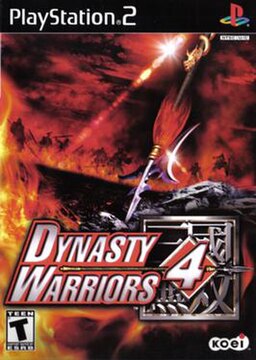
I've been a huge fan of Dynasty Warriors since the very first day I saw a prototype PlayStation 2 in Cannes, back in early 2000. I've been playing them again recently, and decided to delve a little further into the actual source material it's based on.

I was aware that all the characters and events are based on historical characters and events, but I didn't really know much about them.  I'll be honest: I didn't know the difference between the Warring States and the Three Kingdoms periods. (The Warring States was 475-221 BC, the Three Kingdoms was 220-280 AD - about half a millenium apart. To put in perspective, that's roughly the difference between Buddha and Jesus, or between Jesus and Mohammed. But that's irrelevant.)


I started by reading the epic Romance of the Three Kingdoms, on which DW is based. ROTK is a terrifyingly long book - four volumes of really small print. It was written in the Ming Dynasty, some 1400 years after the actual events. (Again, putting it into perspective, that's a similar time gap as in Shakespeare's Julius Caesar  and Antony and Cleopatra.)

It's important to realize that ROTK is not a history. It's a novel based on actual events, and it's about as accurate as watching Tarantino's Inglourious Basterds and treating it as a documentary. Author Luo Guanzhong invented characters, changed events, added some bits of mythology, and generally slanted everything to make it into a good story. (If you're interested, here's a list of what he just plain made up - and that doesn't include the bits he dramatized for literary purposes.)


So I then started looking at the real history.

All I can say is that China was, apparently, overrun by total psychopaths for about a century.

What's fascinating is that they all claimed to be adhering to a deep moral code, Confucianism, which is based on loyalty to one's superiors. And yet, they were the most untrustworthy, disloyal, backstabbing and pernicious bastards you can imagine. The entire period is characterized by people turning on their lords and friends, betrayals, deceit, and opportunism. Anything is permissible in the pursuit of power. Today's allies are tomorrow's enemies, and your reward for helping someone is likely to be your own execution.

Liu Bei: changed sides several times, lost countless battles, and became emperor for two years.
And the scale of the slaughter is unimaginable. At the end of the Han period (220AD), the population of China was around 60 million. By the time the Jin Dynasty supplanted the Three Kingdoms, the population was reduced to 12 million. That's an incredible 80% of the population killed by war, famine or disease. (Once again, some perspective: in World War 2, China lost around 20 million people - less than 4% of the population. Britain lost 2% of its population in World War 1, and that was seen as devastating. The Rwandan genocide killed off 10% of the population. Even the Black Death only managed to kill 30% of the population. The nearest equivalent is the Paraguayan War of 1864-70, during which the Paraguayan population was reduced from around 900,000 to 220,00, of whom only 28,000 were adult males.)

It's almost impossible to imagine a world where 8 out of every 10 people is dead. Almost all the adult males are gone, and all that's left are women, children, and old people. It's like something out of a post-apocalyptic nightmare.

In fact, it IS a post-apocalyptic nightmare.

Zhang Fei: drunken killer who murdered his wife and children to prove his loyalty, and lost countless battles - and tens of thousands of troops - through being too inebriated to follow orders. 


Not only were the warlords ruthless with the lives of their men in battle, their personal cruelty and bloodthirstiness was staggering. There are numerous accounts of when one lord would execute another - and would then also kill his entire family, his household, his servants, his retainers, and all their families. Literally thousands of people would be executed. Mass executions of prisoners were commonplace. Scorched earth policies were the norm, even if this left the population with no food and no option but to resort to cannibalism. Even their own families weren't safe from these psychos: apparently Zhang Fei and Guan Yu were so eager to prove that they were completely committed to their attack on another warlord and weren't distracted by thoughts of home that they murdered their own wives and children. In another incident, Liu Bei needs lodgings for the night, but the guy he stays with has no food, so he kills and cooks his wife and daughter. Liu Bei, far from being horrified by this, is impressed with the man's devotion and rewards him handsomely.


Lu Bu: crazy killer who murdered Ding Yuan, the man he regarded as his adopted father, in order to ingratiate himself with Dong Zhuo. He was then adopted by Dong Zhuo, and Lu Bu murdered him too. 


And those - let me stress - are the so-called good guys. Their opponents, Dong Zhuo, Cao Cao, Lu Bu and others, are just as bad. The only thing they apparently know how to do is to kill and destroy, and they all hope to be the last man standing.

What's really bizarre is that these nutjobs have a strange respect for one another. Time and again, after some calamitous, pointless battle in which tens of thousands of soldiers are killed and maimed, the loser surrenders and is rewarded by the victor, while his defeated army is decapitated en masse. The common people are worthless, but their rulers are treated with godlike reverence. As one of them points out, Confucius says that "the law does not apply to the man of greatness." And then, a short while later, they'll be trying to kill each other again, whether by assassination, poison, or raising more huge armies to start another war.

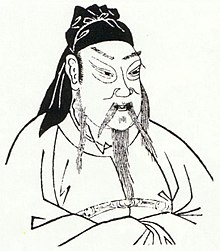
Guan Yu: changed sides to fight against his friends.  Regarded as the epitome of loyalty, and  was deified. He is still worshiped today throughout China. 
It's clear that none of them was fit to govern a chicken coop, let alone an empire. Under their rule, China was brought to its knees.   In any normal, sane society they'd be vilified as insane lunatics. They're as bad as Pol Pot, Hitler, Genghis Khan, Attila the Hun, Idi Amin, or Stalin. And yet, they're widely seen as heroes - both at the time, when ROTK was written, and today.

I think I'll go and play Final Fantasy instead. Sometimes it doesn't do to read history.