Showing posts with label religion. Show all posts

Monday, March 21, 2011

Why I am not a Buddhist

Earlier this year, I seriously asked myself whether 2011 would be the year I came out and admitted to myself that I am, actually, a Buddhist. My religious/spiritual beliefs are somewhat confusing, even to me. I’ve always felt somewhat religious, even though I know that it’s all a crock, and I’m pretty much a hardcore rationalist. However, no religion I’ve ever found actually seems to suit me.

I’m a bit pagan, in that I do tend to observe the Celtic seasonal festivals, but that’s more to do with marking the passage of time than anything mystical. I’ve messed around with various occult systems, and have found them to be, on occasion, a good way to deal with psychological issues and personal development. (I don’t, for example, believe that casting spells can have any effect; on the other hand, making talismans in a ritual fashion can concentrate the mind wonderfully and help you to focus on the problem you’re trying to address.) I’m definitely not a believer in “big church” religion, and I’m totally opposed to following religious laws that can’t be justified in a modern context, no matter how sensible they were when first conceived.

Since I was about 13, though, I’ve had a fascination with Buddhism, particularly Zen. What I liked most about it was that it was much more about understanding your own mind and learning to live in the world than anything I normally think of as a religion. The Dalai Lama couldn’t be much more different to the Pope – he’s always talking about compassion, kindness, and understanding, not calling down damnation on those who doesn’t follow some archaic teachings, or who follow them in a slightly different way.

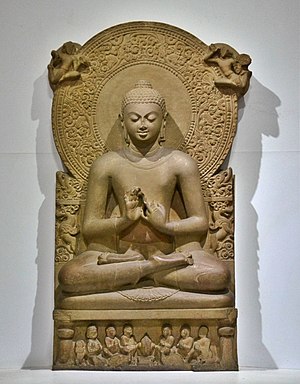
Earlier this year, I went to an Open Day at one of our local Buddhist temples. (The Chinese one, not the Thai one in the picture above.). As always, I was struck by the peace and tranquility, and by the friendliness of everyone, priests and visitors alike. After wandering around for a while, I figured that maybe after thirty years, I should just stop wavering and try being a practicing Buddhist. So of course, I wavered. I loaded myself up with all the free literature I could find, and decided to read a bit more before committing myself. After all, I know plenty about Buddhism, but very little about what it means to be a Buddhist.

Two months later, I’ve decided it’s not for me after all. Of all the religions I’ve flirted with, Buddhism’s still the one I feel most comfortable with, but I wouldn’t be honest with myself if I said it was something I can actually accept. Here’s why.

  • Belief in authority: many Buddhist teachings rely on the words of past masters. It feels like some old-time school where all you’re required to do is to learn selected quotes from Aristotle or Aquinas and parrot them back unquestioningly. That’s not enough for me. Just because Lama so-and-so said something doesn’t, to my mind, make it true. However, that’s often all you get.
  • Too many myths: traditional Buddhism is full of mythology. There’s a firm belief in ghosts and other supernatural elements. While I love myths and stories, I can’t make myself believe in them. (Strangely, I have very little problem accepting the idea of karma, but deities as literal beings? Not for me.)
  • Belief in parables: a typical Buddhist teaching method is the parable. Someone does something bad and misfortune befalls him; someone else does something good and he is rewarded. Those kind of stories are fine as kids’ fairy tales, but that’s not something I can accept as part of a serious belief system. It’s one thing when they’re presented as allegory (which Christian parables generally are), but not when they’re presented as literal truth.
  • Reliance on lists: the final straw for me was the extensive lists enumerating all sorts of things. I can’t quite put my finger on why, but those annoyed me. For example, one book I had listed the 80 characteristics of a Bodhisattva. They just seemed to me like lists of adjectives, especially when they started repeating themselves (e.g. neat hair, tidy hair, clean hair, well-trimmed hair). That seems to me like one thing: Bodhisattvas look after their hair. What’s the point in making me learn four ways to say the same thing? It just felt, well, childish. And then they started listing clean nails, well-trimmed nails, clean face, clean skin, clean feet, and so on. Okay, okay, I get it! Bodhisattvas have personal hygiene!
    It was the same with various other lists; they didn’t seem to tell me anything, just weird metaphysical categorization of things for no apparent reason. Like lists of postures you can adopt while meditating (sitting, lying, standing, kneeling, walking, etc) or times of day you can meditate (before dawn, at dawn, after dawn, mid-morning, etc), which basically boil down to “you can do this any way you like, any time you like”. It feels like false wisdom – lots of words, signifying nothing.

Now, I’m absolutely not knocking Buddhism. If the world had more practicing Buddhists in it, it would be a much nicer place. I still believe that the Buddhist principles of compassion, duty, and awareness are the way I want to live my life. I just can’t truthfully say that I believe in the religious trappings with which those principles are presented.

I’ll still have my smiling Buddhas by my desk and by my bed, though. Right next to the Ganesha, the mandalas, the Tree of Life, and the Celtic talismans. There’s something in all religions. Just not the religious bit. Not for me, anyway.

Sunday, February 20, 2011

Holy Land Experience

A few weeks ago, we went to the Holy Land Experience, just to see what's actually behind those fake Roman walls.

Well, it was an experience, there’s no denying that. It’s one of Orlando’s lesser known theme parks. (Well, legally, HLE is a church, which means it doesn’t have to pay taxes, even though it rakes in an absolute fortune. Nice deal if you can get it.)

It was pretty much what you’d expect from a theme park. Plastic religious stuff, presentations about as sophisticated as an elementary school play, overpriced refreshments, and people dressed up in silly costumes. That, however, isn’t what interested me.


What I was mainly there for was the people-watching and to understand the way Christianity is presented in America. There was one huge church group there, and it was refreshing to see that many of the teenagers were giggling as much as we were when faced with giant plastic whales, cardboard cut-out Jesus, and a gift shop full of cheesy souvenirs.


On the other hand, there were people simply in awe at the re-enactment of the Tabernacle in the wilderness when the Ark of the Covenant was revealed (was I really the only person in the room having an Indiana Jones moment?) and they actually broke into applause when paintings of various prophets were unveiled at the end of a tour chronicling the development of the Bible. And when it came to the Passion, many of them turned away in genuine tears at the crucifixion, and there were shouts of Hallelujah when Jesus came back like a disco star at the end complete with shiny robes and finger pointed to heaven like John Travolta.


I’ve never witnessed that level of religious fervor before, and it was truly bizarre to see it in a place that was obviously so commercialized and fake. I can understand it at somewhere like the Wailing Wall, Lourdes, Mecca or somewhere with actual religious significance, but at a cheesy 15-minute performance at a theme park in Florida?

Wow.

Now, I’m pretty well read when it comes to religion, even though I’m not a Christian. My mum, who was there with me, did divinity and theology at university, and is even more familiar with the source materials. The Christianity presented at HLE is a complete distortion of and is riddled with lies, myths, and completely fallacious logic.

For example, at the exhibition of the history of the Bible, they showed us some Mesopotamian cuneiform writings, and explained how these proved the literal truth of the Bible. There was one tablet which chronicled Sennacherib’s destruction of a Hebrew army. This corresponds exactly with the Biblical account of the same battle, which proves that the Bible is historically accurate, and therefore accurate in all other respects. There’s just one small difference between the Assyrian and Jewish accounts; the Assyrians say they won the battle, the Jews say the Angel of the Lord slaughtered the Assyrians. This, apparently, not only attests to the truth of the Bible, but proves the superiority of God. To which the audience all nodded and praised the Lord.

Let’s just review that for a second. What they actually said was, “We can prove the Bible is true because it completely disagrees with all other historical sources?” Yet nobody questioned the logic. Not to mention the fact that even if the Bible did agree with the historical sources in this one respect, that does not mean that the rest of the book is automatically true.

Or how about the statement that the Bible was copied by hand many times, but there was never a single error or change? That’s just provably false, as any Biblical scholar will tell you. But this “fact” was put forward as proof that the Bible is truly miraculous, and again, the audience applauded and praised the Lord some more. And they didn’t even notice when two minutes later they were told about the different versions of the Gospels...


And their version of Christianity doesn’t even follow the damn Bible anyway. Where were the two thieves at the crucifixion? What happened to the bit of the story where Pilate offered to let Jesus go, but the people chose to release someone else? Conveniently snipped in the interests of drama. And those plastic animals going into the Ark two by two? That’s not actually what it says in the book.

The LORD then said to Noah, “Go into the ark, you and your whole family, because I have found you righteous in this generation. Take with you seven pairs of every kind of clean animal, a male and its mate, and one pair of every kind of unclean animal, a male and its mate, and also seven pairs of every kind of bird, male and female. (Genesis 7, 1-3)

And of course, all those paintings of Jewish prophets and apostles? Not a trace of a Semitic gene among them. They were all blond, with blow-dried hair, pale-skinned, and looking like Charlton Heston. It’s completely pandering to Western stereotypes.


Basically this is Christianity taken from a Victorian children’s Bible and turned into easily digestible family entertainment, based on misreadings of the texts and fallacious extrapolations dressed up to sound like learned teachings. It was exactly what I expected, but it still bemuses me that over half the people in this country believe that it’s the literal truth, it’s the word of God, and it’s the cornerstone of their faith.

That’s the true horror of the Holy Land Experience.