Saturday, July 10, 2010

Potted woodlouse

Our ancestors were a lot less squeamish than we are about what they'd eat. This fine recipe, courtesy of my former CEO and all-around good bloke Jeff Zie, comes from a 17th century English cookbook. Apparently it tastes like shrimp paste.

Collect a quantity of the finest wood-lice to be found, and drop them into boiling water, which will kill them instantly, but not turn them red, as might be expected. At the same time put into a saucepan a quarter of a pound of fresh butter, a teaspoonful of flour, a small glass of water, a little milk, some pepper and salt, and place it on the stove. As soon as the sauce is thick, take it off and put in the wood-lice. This is an excellent sauce for fish.
Well, seeing as I'm allergic to shrimp, but love the taste of shrimp paste, I'm half-tempted to give it a go. This does, naturally, leave me with two questions.

How do our local Floridian woodlice compare to English woodlice? The initial thought is that the American pill bug is likely to be meatier than your English variety, though whether it will have the same taste is a whole different question.

American pill bug or roly poly, of the Armadillidiidae family

And secondly, what are the criteria for "the finest woodlice to be found"? According to Jeff, they'd be "the ones in top hats". Hmm.

This calls for experimentation. Who wants to join me on this culinary expedition?

Thursday, July 1, 2010

Re yr msg

With the advent of the net and mobile phones, we're communicating more and more, but in the process we're having to learn whole new ways to transmit information effectively. Reducing messages to 140-character tweets or texts, or even 420-character Facebook updates, means that we're inventing ways to compress information further and further. At the same time, we're getting used to skimming information streams faster and faster, and extracting the relevant info from it with less and less effort. In the process, information is inevitably lost, and the result is miscommunication, usually without hilarious results.

Basic compression works

I'm not actually talking about the way that we're compressing words. That's actually relatively easy to process. Hebrew elides vowels naturally, and that's quite comprehensible. German portmanteau words are easy to break down and pass into normal speech. We're nearly all comfortable with expressions like LOL, BRB or WTF these days, and we're quite happy with some shortened forms of words.

cu 4 drnks tonite?

is, I think you'll agree, perfectly legible as

See you for drinks tonight?

It's 18 characters instead of 27, which saves you 9 characters - about 33% shorter for no loss of information.

When punctuation gets omitted, that can be harder to parse, but still unlikely to result in major miscommunication. Yes, there are the obvious "Let's eat, grandpa," jokes, where the comma is obviously significant, but those are comparatively rare.


WTF?

The real problem is when messages are so compressed that they are meaningless. Or when they have several meanings, which comes to the same thing. Here's a real example from texts.

Me: meeting @ yr house, mine, or cin?
Reply: y

"Y"? What the hell does that mean? Is he asking me why I want to know, or what the hell I'm talking about, or does it stand for y[ours]? So the exchange continues.

Me: ?
Reply: def

Well, I've been waiting for ten minutes for each reply, so after 20 minutes I'm still no wiser as to where we're meeting. So I phone my friend, ask the same question, and get the answer, "My place, see you at 7." Ah, so "y" meant "yes", and my friend only actually read the first four words before answering. In 15 seconds of actual conversation, we transmitted more useful information, more accurately, than we did via text. Of course, it would have worked fine if we'd actually sent the following texts, but we didn't. We were too busy "saving time" and sending compressed messages, and the end result was it took longer and was less efficient.

Me: are we meeting @ your house, mine, or the cinema? and what time?
Reply: mine at 7

Sorry, I thought you meant me!

The other problem with this kind of compressed communication is that it's often cryptic and untargeted. Let's take an example like this (fictionalised) status update:

Fred is getting fed up of ppl who make stupid & unreasonable requests they could perfectly well take care of themselves

That may be a perfectly reasonable expression of how Fred is feeling, but it's not good communication. Who's he talking about? What are these unreasonable requests? Does he mean me asking if I can borrow his DVD of Star Trek IV? Did I piss him off? Should I apologise and find someone else to get it from? Or is he, in fact, referring to the fact that his sister just called and asked him to drive 200 miles to help her move some trash from the back yard, even though last weekend he had to drive over to help her pick out a new TV? I honestly can't tell - especially if I know nothing about the sister or her trash.

What inevitably happens is the sort of comedy of errors beloved of playwrights and scriptwriters. I'll get huffy because I think Fred's being rude about me, our respective friends will weigh in on one side or the other or play peacemaker, and eventually, when tempers have flared, we'll find out he wasn't talking about me at all. End result: an evening of unnecessary tension and aggravation for all concerned.

Oh, was that a joke?

To make it worse, humour and irony are often lost completely. It can be hard enough to write humour in long form, as most writers can attest. In brief messages, these can be really hard to convey, and simply adding (jk) or ;) doesn't always have the desired effect. We pick up humour from body language and nuances of inflection, none of which comes through in prose. The emoticon is a great attempt to bring that back in, but it doesn't always work. Here's one I posted the other day:

I don't see why people are being so hard on the English football team: they're just as good as the US.

The responses ranged from LOLs to fury, from both English and American friends. Frankly, I couldn't give a toss about football, and I was just having a friendly dig at soccer fans of both nations, but that's not how it came across to some people.

I never got yr msg

Of course, the biggest assumption we all make is that when we've sent a message, that means the other person has actually received it. I've had days when I'm getting literally hundreds of emails, thousands of tweets, and God only knows what else coming through skype, FB and text. So yeah, I miss messages.

Or else I'm away, don't have Net access, and won't get your message until get back. Or maybe I'm in the air or driving, or my electric is out, or I'm recording VO and have everything switched off, or I'm asleep or sick. There are a hundred reasons why I might not have got your message yet, or may have skipped over it.

A huge amount of aggravation is caused by sitting there, angrily thinking "the bastard never got back to me" or "shit, I need this info right now, when's he going to respond". I've done it. So have you. For all you know, the other person is blithely unaware of this and is sitting on the beach with a pina colada.

All we have to do is keep talking

I'm not advocating that we all stick with proper English, and that modern communications all suck. Far from it. We're developing a powerful and effective new language and new way of communicating emotions and information to a wide audience.

However, as was drummed into me at school, in the cadets, at university, and in business, communication is not about telling people things. Communication is about making sure they understand correctly what you want them to know. Clarity, not brevity, is the essential component of successful communication.

Sometimes, it's better to pick up a phone and speak directly to someone, or go and see them and deal with the issue face to face. It's often quicker in the long run, and there's less risk of miscommunication. (Though, as I've found many times, emails before and after confirming what was said can be invaluable.)

Sometimes, it's better to spend the extra few seconds typing a message in full instead of abbreviating it to the point of ambiguity.

And sometimes, it's better to spend the time and explain what you actually mean, rather than try to squeeze too much into a few sentences. There's still a role for lengthy blog posts in a world dominated by short status updates.

Then again, maybe all I needed to say was:
socmed comms r often poor way 2 get yr meaning across? twitter/fb/txt FAIL :)

Wednesday, June 30, 2010

What does online friendship mean?

"Friend" always was a broad word. Your closest friends are people you would pretty much lay down your life for. But your friends also include the people you know at the pub, work colleagues you get on with and have occasional conversations with, and people you socialise with in other ways.

I've always been intrigued as to the point when someone goes from being a "friend of a friend" to a "friend". In my mind, that happens when you start making an effort to have a relationship with them directly instead of via that other person, even if it's just meeting for coffee, or lending them a DVD.

Social media, though, broadens the concept of friendship still further. A friend on Facebook means "someone to whom I can establish a connection". Facebook's suggestions actively prompt you to befriend everyone who's a friend of a friend. So, since status in these things is achieved by maximising your friend count, you friend request these people. Not wishing to be rude, they see you have a mutual friend, and accept you. Now you can befriend all their friends, and so it grows. Going from "friend of a friend" to "friend" just takes one click each, and there's absolutely no social or personal interaction.

Where it gets really messy is that in the social media world all this is public. You friend someone, all their friends can see this, and so they click, see who you are, and befriend you too. Woo! Everyone wants to be your friend! Aren't you popular! Actually, no. It's more like someone shows up at your house, announces themselves as a friend of your mate, so you invite them in, and next thing you know, they've brought all their friends and their friends' friends, and there's a party in your living room full of complete strangers. (I hope you're thinking of that scene from Weird Science now. I am!)


Now turn it around. We all know what it's like when one of your friends breaks up with their partner, and you have to do your best not to be seen to choose sides. In real life, you adjust your social life so that you can gracefully avoid people you don't want to stay in touch with, and life gradually takes its natural course without, hopefully, offending too many people. In the online world, though, there's no accepted etiquette or sense of discreet grace when you un-friend someone.

The problem is that we feel pressured to publicly declare as friendships things that are only casual acquaintances. If my friend Fred has a new girlfriend, Jo, I feel obliged to call Jo my Facebook friend, even if we don't actually like each other. If I belong to a lute-playing club, I'd feel obliged to call any other club member my friend. When social circumstances change, and I no longer have an association to those people, the logical thing is to dissolve that spurious friendship. However, that's a hugely emotionally charged act, especially since everyone can see you do it. People get massively offended when you unfriend them. It generates responses such as "you were obviously never my friend in the first place, which makes you two-faced," or "what did I do to offend you?".

Strangely, the unfriended get offended even if they were hiding your updates. It's not that they actually wanted to maintain any kind of relationship with you, or even had one in the first place, it's purely the fact that you have removed them from the status of "friend" and taken an active decision to exclude them from your social circle.

A while ago, I wrote about the concept of autistic media, and how social media really can't match up to the complexity and shades of human interpersonal relationships. I'm still amazed by the level of communication that we now have, and how we can use this to enrich our lives in many ways, but it's becoming increasingly clear that we still have a long way to go on the fundamental social and emotion-driven structures that will be necessary for online communities to work properly.

Monday, June 28, 2010

The soporific screen

I don’t know what it is, but these days I find it almost impossible to watch an entire movie without – quite literally - falling asleep. Whether I’m in the cinema or at home, I can’t make it all the way through. Sometimes I can’t even get through a single episode of a TV show. It’s becoming really annoying.

I don’t think it’s just tiredness, though that certainly doesn’t help. I find myself dozing off in matinees or when watching something late afternoon or early evening. It’s certainly not boredom – I end up dozing through the end of films I’m really enjoying. It’s not that I can’t concentrate for two straight hours – I can read a book or play a game all day without dropping off, but half an hour after a movie starts, I start to feel sleep creeping up on me.

I thought for a while it was a reaction to darkness. Dave & Darien both prefer to watch movies with the lights off, so I tried insisting that we leave the lights up. That certainly made things better, and now I can usually get most of the way through a movie or into the second episode of TV before drifting away. I tried changing my posture, and that makes a difference too. If I’m lazing on a couch with my feet up, I tend to crash out fairly rapidly. Sitting upright in an armchair or sitting on the floor helps. However, neither of those is sufficient.

I was fascinated to read in Wired this week how using the Internet is changing the way our brains process information. We’re becoming more and more adept at skimming, at multi-tasking, and at dealing with rapidly changing data sources. After working in machinima for seven years, I now find myself thinking of a ten-minute movie as a long piece, and am getting more and more used to two-minute movies. Watching a full-length feature is rather like trying to listen to an opera or a symphony after being immersed in a culture of three-minute pop songs and advertising jingles.

There was a time when I would sit in a chair or lie on the floor and just listen to an hour-long symphony. Nowadays I’d want something else to do with my hands and eyes while I was listening, and would probably be getting restless after the first movement. When I listen to music now, I’m usually cooking, reading, web-surfing, chatting online, working, or doing housework. (Or, more likely, several of these at once.) I’d probably stay awake through movies if I treated them as background in the same way.

Part of the problem, I suppose, is that watching a movie is completely passive and non-interactive. With a book, at least I’m turning the pages, I control the pace at which I read, I can easily skip back a few pages, and I can get up, make coffee, and read anywhere. I'm imagining the scene, turning words into mental images and sounds. With a movie, I’m completely captive. It demands my attention, but requires that I do absolutely nothing else and gives me everything I need to see and hear. As a result, when I watch a movie, it’s as if my brain is saying to me as soon as I relax, “nope, nothing to do here, Matt, might as well go into stand-by mode”.

Strangely, I can sit by the shore of a lake, in a forest clearing, on a beach, or on top of a hill, and just sit, silently, thinking or meditating for hours without going to sleep. By contrast, I can lie in bed in the darkness for hours, and my brain races insanely, no matter how tired I am. My preferred insomnia cure is to get up, put on a movie, and fall asleep on the couch.

It's perplexing. And, as I said, annoying.

Sunday, June 27, 2010

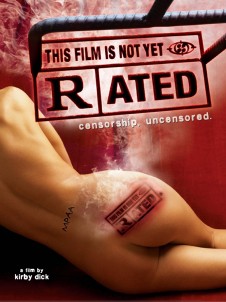
This Film Is Not Yet Rated

This is a fascinating documentary about the American movie ratings process that anyone interested in either film or censorship should watch.

As a European, I have to admit I found several aspects of the movie completely baffling.

Let’s get this one out of the way first. It’s a well-known issue that Europeans are reasonably tolerant of sex in movies, but tend to shy away from extreme violence, whereas Americans will accept almost any degree of violence, but are comparatively puritanical when it comes to sex or bad language (despite having the world’s largest porn industry). As a result, the criteria by which films are rated are completely different to what I’m used to. Movies I think of as suitable only for adults are kids’ movies here, and movies I’ve watched with my kids are deemed shocking and unacceptable because there’s a hint of boobage or some bad language. However, that’s not what struck me this time.

The whole basis of US ratings seems to me to be useless. When we watch movies at home, we usually end up looking at the European ratings to find out whether they’re suitable for our 12 and 15 year old kids.

For the benefit of my fellow non-Americans, the US ratings system goes like this:

  • G: kids of any age can watch this movie
  • PG: kids of any age can watch this movie (but it may contain material some parents may consider inappropriate for pre-teens)
  • PG-13: kids of any age can watch this movie (but some parents may think it’s inappropriate for pre-teens)
  • R: kids of any age can watch this movie (but the cinema may require them to have their parents with them)
  • NC-17: for over-18s only (and probably won’t actually get released or broadcast because the studios and distributors won’t touch it)

In other words, anyone can watch anything unless it’s NC-17. The PG-13 category is so broad that some movies are fine for 10-year olds, others – in my opinion – aren’t really suitable for a 15 year old, and would probably be classified 18 in the UK. Kids change hugely between 11 and 18 as they go from pre-puberty to adulthood, and there’s absolutely no indication in the rating of where on that scale a PG-13 fits.

The thing that feels truly weird is that Americans simply don’t have mass market movies for grown-ups or older kids. In the UK, we’re quite comfortable with the idea of having major movies that you have be to 15 or 18 to see. In America, if the theaters can’t get the 14-16 year olds into the cinema and sell them popcorn, they simply won’t show the movie. As a result, an NC-17 rating is basically the kiss of death for a movie. It relegates it to the status of a porn flick.

The strange side-effect of this is that when film directors are arguing for an R rating rather than an NC-17 rating, what they’re actually demanding is that scenes that we would think are suitable only for adults are actually fine for teenagers or even younger kids. In other words, they’re saying that young kids should be able to watch people being tortured and dismembered in graphic close-up, anally raped, having a drug-fuelled orgy with crucifix-shaped dildos, screwing donkeys, or whatever else they want to include in their story.

They’re not actually saying that, of course. They’re just trying to work with this broken ratings system.

What they’re actually asking for is two different things. First, they want the artistic freedom to make the movie they want to make. Well, they already have that freedom. They can make the movie any way they want, and they have the option of releasing it as NC-17 or unrated. Nobody's stopping them making the movie, as long as they can get the funding for it. That puts them in the exact same position as every other artist.

More importantly, though, they’re fighting for a commercial opportunity for that movie, and that’s where they have the problem. There is no commercial market for NC-17 movies in the US. That’s down to the decision by the studios, distributors and exhibitors not to show NC-17s. Wal-Mart and Blockbuster won’t touch them either. As a result, they have to get that R rating from the MPAA one way or another, or the movie is pretty much dead. So either they have to cut the adult scenes the MPAA doesn't like, or they have to argue that the adult scenes are acceptable to kids.

What the US needs, as far as I can see, is to accept that some movies really aren’t suitable for kids, and that there is a place for adults-only movie entertainment that isn’t porn. It’s perfectly accepted in other areas of the entertainment business. Nobody has a problem with putting on a burlesque show and saying over 18s only. Some art exhibitions, theatrical performances, variety acts and gigs don’t allow minors in. Kids can’t get into bars. There’s absolutely nothing wrong with that, and most Americans are quite comfortable with that policy.

So why do the distributors and exhibitors have such a problem with movies that are unsuitable for minors? An NC-17 movie should be no different to any other form of 18+ entertainment. If they were happy to show NC-17s, there would be less pressure to include increasingly hardcore adult material in R-rated movies, and that, surely, would be more in keeping with their mission to protect kids from unwholesome movies.

Saturday, April 24, 2010

Happiness is...

I live in a place filled with sunshine, palm trees, lizards, lakes and dragonflies.

I have a roof over my head and plenty of food to eat.

I have an almost limitless source of information and entertainment at my fingertips, twenty-four hours a day.

I can communicate with friends & relatives, anywhere in the world, instantly.

I have a wonderful family, and I'm married to a truly beautiful, loving, magical lady who lights up my life every single day.

If this is what I have to look forward to for the next forty years, I'll take it.

Gladly.


Saturday, March 27, 2010

Honestly?

Yesterday, someone told me I was "too honest to be in marketing". I think that was actually a compliment, but that got me thinking. Why does marketing and advertising have to be dishonest? Honestly, I don't think it needs to be. I believe that dishonesty in marketing isn't just a shoddy way to treat your customers, it's also bad business.

So, by way of a somewhat tongue in cheek example, here's what I mean by honest marketing. I must have seen thousands of car ads in my time. I can't remember a single one of them, though.* Except this.

"Volvos. They're boxy, but they're good."

That's not actually a Volvo ad. It's from a movie, Crazy People, in which Dudley Moore enlists the inmates at an asylum to write ads, and they respond by just saying things that are true. I've had several Volvos, and you know what? They're boxy, but they're good. Would I have another one? Yes. Why? Because although they're boxy, they're good.


My other favourite ad is for a range of DIY products in the UK, Ronseal. Here's an example.

"Ronseal clear wood varnish. It's clear, and it's for varnishing wood. Does exactly what it says on the tin."

Fabulous. If I went to the DIY shop, I'd buy Ronseal products. I'd skip past all the hyperbolic "amazing", "incredible" and new, ultra-whatever products, and go for the one that does exactly what it says on the tin. That phrase is so damn good, it's passed into standard British parlance.

So, here's my first tenet of honest advertising.


Skip the bullshit. Tell your customers exactly what they're buying. If it's what they want, and it's any good, they'll buy it. And they'll respect you for it.

The great thing is that this works, even when you have a second-rate product. If people know they're buying into something that's not brilliant, they won't get disappointed. Going back to cars, Skoda was a shitty Eastern European car maker that got bought up by Volkswagen. VW used Skoda to manufacture cheap versions of the VW range. It took a while to get the quality up to scratch, but when they got there, it was quite impressive. You had all the reliability of a German car, but at half the cost, because they ditched all the styling, polish, and frills.

When I bought a Skoda, the dealer was absolutely straightforward. I took a Skoda out for a drive, and took the equivalent VW out too, so I could see what I was missing out on by going for the cheaper vehicle. That Skoda did exactly what I needed, so I chose it. And no, he wasn't trying to upsell me to a VW. He was a pure Skoda dealer, and the VW wasn't even for sale.

Interestingly, surveys of car owners for the last ten years repeatedly show that Skoda owners are more satisfied with their cars than owners of any other vehicles. More than Ferrari, Lexus, Rolls Royce, or Mercedes. More, even, than VW. Why? Because they knew exactly what they were buying, and they're happy with what they got.


Same with broadband. If you're offering "up to" 10Mb, but only delivering 2Mb, your customer's going to get pissed off. But if you sold him 2Mb in the first place, he's happy. He doesn't feel cheated. I really appreciated it when our new ISP, Century Link, told us they weren't sure we could get 10Mb here, so they'd come and test the line. If the tests showed we could only have 5Mb, they'd downgrade the package for us, so we wouldn't be paying for something we weren't getting. Right there, I felt I could trust them. (And was very happy when the tests showed we were getting a rock solid 10Mb after all.)

So, here's tenet number two.


Don't be afraid to talk about your shortcomings. The customer will find out sooner or later anyway, and if they know in advance, they won't badmouth you later.

The reason I believe dishonesty is bad business is that your reputation is all-important, particularly in the internet age. It doesn't take long for word to spread. If all you're in it for is to make a fast buck and get out, you can get away with it. But if you're trying to build a long-term business, you can't afford to piss people off. They'll tell their friends, blog it, twitter it, and so on. And that stays online for ever. It only takes a few complaints to ruin your seller rating on Amazon or eBay. A quick Google will unearth all the bad experiences people have had with you, and those will completely outweigh all the good ones in your prospective customer's mind.

It's the same with luring people to your product under false pretences. There's the Evony saga, for example, which promises sexy women, and then delivers a crap 2D top-down game based on Age of Empires. And then there's the "free gift" tactic, where you offer something enticing for free, but don't tell people that they have to buy something to get it. For example, I could advertise free pony rides in the marketplace on Saturday afternoon, but then tell my customers that they only get their pony ride if they buy a copy of my amazing new comic, Mighty Mongoose Monthly.**


This is bad for two reasons. First of all, I'd be attracting the wrong people. I'd have a crowd of people who want to give their kids a pony ride, not people who want to read MMM. So my advertising's going to the wrong place and I've wasted my money. And secondly, they're going to be pissed off. They build up their expectations, then get hit with the double whammy of "give me money to get the free thing" and "get this thing you don't want". Yeah, the free pony ride is real, but I've misled my potential customers. So they go away and tell everyone else who's waiting in line that it's a scam, and people who might have bought MMM now won't, because they think I'm a con artist. I'd end up being bracketed with those guys selling time-share homes in Spain by offering your auntie a free dinner or a cheap cruise.

So tenet number three.


Don't try and bamboozle the customer. Sell what you're selling. Don't waste your time and theirs promising them one thing and then trying to persuade them they wanted something else.

Social media has changed the way customers relate to businesses. They want to know the business. If they're going to develop a long-term relationship with that business, they want to feel part of it. They want to believe that the business cares about them. And above all, they want to trust that business.

More and more customers are suspicious and enquiring. They read blogs, Facebook pages, and twitter streams. They ask their friends. They check on Google. If they like what they see, they'll buy, and then they'll spread the love. If they don't like what they see, they won't buy. And if they feel uncomfortable or disappointed, they'll spread that too.

So, if your relationship with your customer starts with hyperbole, false claims, or the like, you're asking for trouble. It's like trying to find a girlfriend by impressing young ladies with your Ferrari (rented), telling them about your (imaginary) job in Hollywood, and promising to get them roles in movies (and we all know what that entails). There might be a few one-night stands in it, but it's hardly the basis for a long-term relationship, and it won't take long before everyone knows what sort of sleazebag you really are.


Maybe you'd be better off telling them the truth: you're an accountant from Surbiton who does occasional work for a small indie film company. They might actually like you.

So, all you marketing guys, estate agents, and advertisers. Stop being so proud of the fact that your job is about misleading people. They'll find you out, you know. Honest marketing works, and creates long-term business far more effectively than trying to pull a fast one.


Sincerity. When you can fake that, you've got it made.
George Burns

Notes
* This is a lie. I also remember "Vorsprung Durch Technik".
** This is also a lie. Mighty Mongoose Monthly comic does not exist. But if it did, reading it would make you irresistibly attractive to women, wealthy, and would come with a free Caribbean island on the cover of Issue #1.***
*** This is a lie too. The island's not actually on the cover as such. You have to mail in a coupon and I'll send you your certificate of entitlement to the island. And I say "island", but it's actually more of a rock than an island, and it's only on the limited edition of Issue #1, which costs $72m.