I reckon I've heard more live music in the last seven weeks than the preceding seven years. This, dear readers, is a Very Good Thing.

Miscellaneous musings, thoughts, and comments, in no particular order
I reckon I've heard more live music in the last seven weeks than the preceding seven years. This, dear readers, is a Very Good Thing.


Look away now, folks. Matt & Anna get mushy on the beach.
I was smitten by a nasty cold last week (great timing, eh?) so it was a little more subdued than we were expecting, but we still managed to fit in a lot.
The Fort (Castillo de San Marco, St Mark's Fort, Fort Marion - it's had many names in the last 400 years) is one of the star-pattern fortresses that you no longer see in Europe. It's successfully defended the city ever since it was built. It's been occupied by the Spanish, French, English and Americans, and was still in use a hundred years ago. The place is a testament to the power of cannon: no ship was able to sail down the Matanzas River past the fort. It was also well night impregnable to anything the 17th, 18th and 19th centuries could throw at it. It's built from coquina, which is basically compacted seashells, and cannonballs just bounced off it.

Anna gets something powerful between her thighs.
A short way along the seafront from the fort is Harry's, one of the restaurtants that everybody - and I mean everybody - told us we had to try. It's a chain, but don't let that put you off. It was, quite simply, superb. It's a specialty seafood place, so I couldn't eat most of what was on the menu, and settled instead for Louisiana pork tenderloin, which came with a mushroom pepper sauce. I have never, ever tasted pork so good. Definitely a place to revisit every time we go.
Harry's. In case you missed it earlier, they serve the best pork ever. Really.
We had originally intended to get married in the courtyard of The Lightner Museum, but that plan fell through when they told us how much it would cost. So instead, we just wandered round it. The place is a glorious pseudo-Spanish former hotel and casino that houses the most insane collection, of, well, collections. Lightner was a rich eccentric (there are a lot of those in St Augustine's history) who founded Hobbies magazine and collected other people's collections. It didn't matter what they were collections of, he wanted them. As he was dying, he bought the old Hotel Alcazar and created a museum for all his stuff. It's just completely, totally random, and it's a joy to walk around, as you have absolutely no idea what you're going to find next.

The Lightner Building. Looking out from this window: you can see the tower reflected.
The building also houses an enormous Victorian swimming pool and steam bath, which is just pure steampunkery. More on the swimming pool later: for now, I'll just mention the circa 1910 poster which was advertising displays by young ladies of stunts performed in the swimming pool. The poster noted that the ladies would be wearing specially designed costumes that would help gentlemen appreciate their athleticism, and pointed out that the show was not designed to stimulate prurient interest, but to aid in the understanding of the health benefits of swimming. Right. That'd be like the three entrances to the magnificent Ponce de Leon hotel, then. The main entrance, the ladies' entrance, and the entrance for unaccompanied ladies round the back, out of view of any of the churches.

The steam room.
Cellar 6 was an oddity. It felt too upmarket for St Augustine, as if it really wanted to be in Manhattan. It was pleasant enough, the food was good, and the service was excellent, but somehow, not what I was looking for.
Later that evening we took a romantic moonlight carriage ride around the city. Our driver, Will, was obviously suffering from end of season tour guide fatigue, and his commentary was laced with an unexpected level of cynicism and acerbic wit. Actually, that made it a lot more fun than the usual tourist nonsense. The one thing that sticks in my mind is that the one guest house that claims not to be haunted is a former funeral parlor - and they don't put that on the brochures!

St Augustine at night.
We kicked off our last day in town with a trip round the Villa Zorayda, another wonderful folly built by a rich eccentric, Franklin W. Smith. Allegedly a tenth-scale replica of the Alhambra Palace in Granada, Spain, it's nothing of the sort. It's a private home inspired by Moorish architecture which incorporates some styling from the Alhambra, and is home to a lot of amazing artifacts. In its time, it's also been a club, restaurant, casino, and speakeasy, and it just oozes character. The surprising thing about the place is that the architecture is actually really shoddy, especially in comparison to the beautiful objects it's filled with. It looks great, but as soon as you get close, you see how crude and garish it actually is. Still, a fascinating visit and well worth an hour or so.
It's as crazy inside as out.
OK, remember that swimming pool? That's where we went for lunch. They drained it, and filled it with antique shops and a rather fabulous little restaurant, the Alcazar. There's something wonderfully surreal about sitting on the bottom of a swimming pool to eat, especially when a guitarist starts playing show tunes in a flamenco style. The beef and vegetable soup was thick and nourishing, and just what I needed. I followed with blackened chicken and parmesan sauce on linguini, and we finished up with a super-creamy key lime cheesecake.

The Alcazar restaurant. The water level was just below the tops of the archways.
That set us up nicely for a tour round the San Sebastian Winery. Florida wines aren't exactly the world's greatest, since muscadine grapes are so damn sweet you can't really do much with them. However, a free tour and complimentary tasting isn't something to turn down! Our guide, Stephen, was really good; he knew his stuff, and he was entertaining and informative, pitching his spiel at just the right level. As a European who's used to brewing wine in the airing cupboard, it was odd to see that they had to cool the must to bring it down to fermentation temperature, not warm it. To be honest, most of the wines weren't to my taste, but their sherry and port was extremely pleasant.

Stephen extolling the virtues of Florida port and sherry.
We finished off the day at our two favourite places, the Tasting Room and Stogies. I've talked about them before, so I'll just say that they were as good as always. After the tasting at the winery, we were already a little tipsy, and then we moved on to tasting more champagnes and Spanish reds, then ports. I think we must have sampled nearly two dozen drinks and a dozen dishes that day. Perfect. We ended the evening out on our balcony at midnight, looking out over St Augustine and dreaming of coming here again when we can afford it.
Our balcony at the Casa de Solana, a charming B&B.
We took the scenic route home, and went via Anastasia Island, on the other side of the Matanzas River. I finally got to a beach in Florida: the Anastasia State Park. It was almost completely deserted, which was wonderful, and we just sat quietly looking out at the ocean and watching pelicans and other seabirds until we got hot and thirsty.
The Atlantic. Some sand. Some grass. Anna.
We then stopped off at Stir It Up, a little hippie surfer food place by the beach, and gorged ourselves on organic quesadillas and enormous turkey sandwiches and totally yummy smoothies. It's the kind of place you'd drive right by if you didn't know it was there, and quite frankly, that's a good thing. If lots of people found it, it'd get all popular and wouldn't be neartly so good. In fact, forget I mentioned it. Nothing to see here, folks. Move along now.

This is the only clue you get. If you can find this place, eat there.
We carried on down the coast, making just one more stop, the delightful Washington Oaks State Gardens. There was a special deal over the weekend, and all State Parks were free to anyone with a Florida library card, which is kinda cool. It combines natural riverside habitat with formal gardens, and was absolutely filled with gloriously coloured butterflies. Anna was entranced by an enormous grey grass carp: it's the largest of the minnow family, and really rather impressive. We stayed there and relaxed in the shade by the water for a while, until finally it was time to head off back down I-95 to Winter Park and real life.
The only place I know that compares to this for sheer beauty is Rudyard Lake.
Despite not feeling at my best, it was a thoroughly enjoyable few days. I suspect we'll be doing this again for future birthday/wedding anniversary celebrations, until we can afford to buy the house we both want so much.
There are loads more pictures on Anna's Flickr site, and shortly on mine too.
Officiate:
Matt (placing ring on Anna's finger):
Anna (placing ring on Matt's finger):
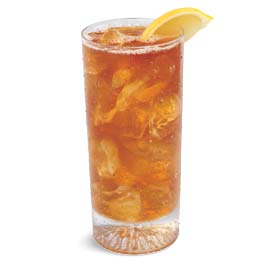
Nope, what you get is something completely different. For a start, it's cold. If you want hot tea, you need to specify hot tea. Then the chances are they'll bring you something made with green tea. You see, you should have said black tea if that's what you wanted. Then they helpfully go and put cream in it instead of milk. And then, if you wanted it sweetened, they pour honey in it. There's not much else they could do different. It is, in the words of the late, great, and much lamented Douglas Adams (who was, like me, an alumnus of St John's College, Cambridge) "almost, but not quite, entirely unlike tea."
It's easier just to accept that this is tea, and the good old English cuppa is something to be enjoyed in the comfort of my own home.
Take light switches, for example. They're all upside down. Down is off, and up is on. Well, the ones on the walls, anyway. The ones on lamps are strange twisty things instead of clicky pushy ones, which requires way more digital dexterity than I can manage last thing at night.
Now, coffee. We all know Americans are coffee experts. So, you want a cup of coffee. You boil the kettle, then you... uh, hold up there. The kettle? They don't have kettles here. If you want hot water, you boil up a pan of the stuff on the stove. If you're really classy, you can get an old-style kettle for the stove, like my great-grandmother used to have. You can go to Wal-Mart and choose from one hundred and sixty-three different models of coffee machine, but they offer precisely one type of electric kettle. They have machines for just about everything else in the kitchen, but not for making hot water. Weird.
This, my dear American friends, is a kettle...
... this is a piece of antiquated steam-age technology.
If you really want to confuse them, use a 24-hour clock. You'd have thought, given how militarized this place is, that they'd all understand what time 1645 is. But no. Seventeen hundred hours, sure, you can probably get away with that. But most of the time you're best off sticking with 12-hour clocks.
And then there's driving. Most of my driving in the US has been in California, and it's not quite the same here. As Maus pointed out, in Florida, they drive on both sides of the road. However, I haven't been brave enough to try that yet, and I'm sticking to the right for the time being.
Let's start with speed limits. As my instructor pointed out to me regularly, the speed limit means the maximum you can drive at. It doesn't mean you have to do that speed. And ever since I got pulled over for doing 32mph in a 30mph zone, I've always been seriously careful to stay below the speed limit. not on it. Here, though, it basically means that's the required speed. And since you don't get prosecuted until you're 5mph over the limit, the required speed is actually somewhere between 3.5mph and 4.5 mph over what it says on the sign. Drive at the speed limit, and you're likely to find yourself hauled over for driving suspiciously, holding up traffic, un-American activities, and anything else they can think of. 5mph over, and you're a dangerous lunatic who deserves to be run off the road. Since the speed limit changes every couple of hundred yards, the age of the computer-controlled car with sensors that know the current speed limit and adjust your speed accordingly cannot come fast enough.
No this isn't a local sign, but I loved the pic.
I was also fairly rapidly introduced to the concept of the "California stop". They have these STOP signs all over the place, which I've always understood to mean that you slow right down, pause, and then take your turn before proceeding. Not so in Winter Park, apparently. That's a California stop, and it's Bad. Very, Very, Bad. Here, STOP means STOP. Come to a complete halt, recite the Lord's Prayer under your breath, and then move off. Failure to stop at a stop sign is a monumental vehicular crime, the magnitude of which can only be compared to mowing down a crowd of school kids and war veterans in the midst of pledging allegiance to the flag during a Sunday church service on a site of national historical significance, and then smashing into a state memorial. Or hijacking the mayor's personal golf cart. Roll through a stop sign and it's Stop, Do Not Pass Go, Go Straight To Jail, Do Not Collect $200. Well, pay $200, or $400 if they feel like it. But you get the idea. And why do they have such odd amounts for parking fines? At the Winter Park Village, if you park in a handicapped space, the fine is $212, except in the space nearest the door of the shop, where it's $213. That makes sense. Don't park in that space, honey, it's an extra dollar if they catch you. Riiiiight.
Speaking of golf carts, though, the Winter Park police ride around in them. This is a country club city, so they fit in well. And in Orlando itself, they have bicycles. That's cool too. Up the road in Seminole Country, whoo-boy, that's a whole different story. The Sheriff's Department got a load of money from Jeb Bush a few years back, and they spent it on buying tanks. Yup, I said cops in tanks. Run a red light in Seminole, and you can have a 76mm shell up your tail-pipe and 5000 rounds of machine gun ammunition in your gas tank in under 3 seconds. (Actually, that might count as quite a big difference between here and England.)
And why, for God's sake, why is all the money the same size? It makes life so easy to sort your cash out when the notes are different sizes. I keep thinking I've got down to a small stack of dollar bills, and then I find a twenty in there. Or else I'm rifling through, hunting for the fifty I've lost in the middle of them.
Mind you, some things are considerably more complicated than they at first appear. I've just about got my head around the fact that courgettes are zucchini and aubergines are eggplants. Except, apparently, in posh restaurants where they're courgettes and aubergines. I guess it's like fancy restaurants in England where they give things French names, so you feel stupid if you don't know the foreign words. "Would Monsieur care for some pommes frites with his poulet avec fromage?" Uh, yeah, cheesy chicken & chips will do fine, thanks. Fries. Whatever. Oh, and there's a Science Center and an Arts Centre. See, it's classier in English. But they still don't understand if you ask them to hold the tom-AH-to. It's tom-AY-toes or nowt.
Still, I seem to be surviving well enough.
Seriously, though, you know what's really different? Not having goddamn CCTV cameras everywhere you go, on every street corner, every road sign, every shop, and every public building, recording your every move and keeping tracks on everywhere you go. Now that, I like. A lot.