Showing posts with label movie. Show all posts

Friday, November 20, 2009

Matt's Guide to 2012


2012 isn't nearly as unremittingly bad as some people make out, as long as you approach it in the right way. Here's my handy five-step guide.
  1. Make sure you have a few beers beforehand. Three or four should suffice. You don't want to get too drunk at this stage.
  2. Spend the first 30 minutes of the movie in the bar with some more beer.
  3. Spend the next 30 minutes of the movie in the bar with yet more beer. (Don't worry, you're not missing anything. Some dudes figure out the world's about to blow up.)
  4. Go into the movie and watch the world blow up for about an hour. Take beer in if it's that kind of cinema. Watch LA fall into the sea. Watch Hawaii burn. Enjoy!
  5. As soon as you see the flying elephant, LEAVE THE AUDITORIUM. (You'll know what I mean when you see it.) Do not stop to collect personal belongings. Do not pass Go. Do not collect $200. Return to the bar and drink beer while laughing at the complete absurdity of what you just saw.
A final word of advice. Do not try this at home.


Sunday, August 23, 2009

(500) Days of Summer

"Boy meets Girl. Boy falls in love. Girl doesn’t." 

OK, that's all I'm going to tell you about this "postmodern love story and fresh and funny “anti-romantic” comedy". That's all I knew about it when I went, and all you need to know. 


It's post-modern. Yes, in the sense that it's deeply infused with irony, cynicism, and bleakness.

It's a love story. Yes, sorta, in the sense that it's a story about love.

It's funny. Hell, yeah. It has real laugh out loud moments throughout, in the dialogue, the filming, and everything else. Even the opening credits are funny.

Anti-romantic? Uh, sorta. Actually, I think it's a very romantic film, but not in the lovey-dovey sense.  Well, if you stick to the end, anyway.  Is that a spoiler? No, I don't think so. It's a will-they, won't-they film, and that, as far as I'm concerned, is inherently romantic. It's about how love can make you feel wonderful, and how no other feeling can come close.

I loved it. I also loved the rather wonderful Enzian, which has now become my favourite movie venue.  (Sorry, Cambridge Arts Picturehouse, you'll always be special to me, but this place has you beat.)  You get to sit at a table, in a comfy chair, and they don't just let you take drinks into the movie, they bring you food and drink. And it's extremely tasty food and drink.  Check out the menu. I can recommend the meatball sandwich. Meatballs made with grass fed bison and fresh local pork, truffle parmesan tomato sauce, sauteed shiitake mushrooms... how can that be bad? And their beer selection is pretty reasonable too.  


The Enzian is home to the Florida Film Festival, and I'm looking forward to many more enjoyable evenings there, both at the movies and at the charming Eden Bar. It's a great place to sit and have a drink before or after the movie (though do remember that the Winter Park cops are wont to patrol the back lanes as well as the main roads!), and stare out at big green leafy things, palm trees, and purty flowers, or else look at the murals and chat to other cinema-goers. Mimosas at $2.50 all day? Bring 'em on!


Oh, yeah, that movie I was talking about half a page ago? See it. Maybe not rush-out-and-catch-it-before-it's-gone see it, but stick it on your rentals list for sure. 


Thursday, August 20, 2009

Ponyo. Oh.

Studio Ghibli movies occupy a unique place in many people's hearts. Just as Disney did when I was growing up, and which Pixar & Dreamworks battled over ten years ago, they've carved out a niche of "kids' films that adults can enjoy, and admit to enjoying, even if they haven't got kids of their own". Until relatively recently, most kids hadn't even heard of this amazing Japanese studio: it was only a few die-hard anime fans who even knew of them. I introduced my mum and my kids to My Neighbor Totoro, and the Japanese were amazed that us gaijin had any idea who Totoro was. It wasn't really until Princess Mononoke got a dubbed US release (featuring Gillian 'X Files' Anderson and translated by Neil 'Sandman' Gaiman) that they began to become even remotely mainstream.

Miyazaki has established a growing legion of fans in the US and UK, and now every Ghibli release is eagerly awaited. Ponyo, however, has surpassed them all in terms of the anticipation and distribution. Last weekend it opened at a massive 927 theaters across the US, compared to just 38 for Mononoke and a mere 26 for the critically acclaimed Spirited Away.


It's loosely based on The Little Mermaid - very loosely. "Inspired by" would probably be more accurate. I won't spoil the story: if you really want to know, you can just Google around. (Or Bing, I suppose. Does anyone actually Bing?) As usual, it's beautifully animated. Miyazaki continues to avoid 3D animation, and sticks with traditional 2D. As with Howl's Moving Castle, he combines flat-coloured figures with painted scenery, giving a clean, fresh look that's worlds away from Wall-E and the like. It's reminiscent of pre 1960s Disney, but with the brightness and detail that modern film stocks and animation can give.


Sadly, though, this was the first time I found myself not enjoying a Ghibli movie. It's not a bad film. In fact, it's a very good film. It's beautifully made and charmingly told. Some may argue that the US script is a bastardisation of the original Japanese version, but frankly, that doesn't bother me. I was quite happy to watch the US dub, and don't feel the need to locate a subtitled version to compare them.

Simply, it was just too childish for me. Under tens will love it, and it's a great movie for curling up on a sofa with the little ones. But it didn't really do anything for me, and I ended up feeling unsatisfied. The hero is, after all, five years old, and the film doesn't really have the action-based appeal that Howl, Mononoke, Nausicaa, or - my personal favourite - Porco Rosso have. And while Totoro and Kiki's Delivery Service are also pretty childish, they are at least aimed at slightly older kids.

It felt - and make of this what you will - like an anime Disney film. Sweet, saccharine, and something I've grown out of. I'm not saying it's not worth seeing. Just be prepared for something a little younger than Miyazaki's usual offerings.

Wednesday, August 12, 2009

Ibn Battuta: Beyond Cinedome

The more time I spend messing around with movies, the more I fall in love with the tried and trusted format of a nice, simple 16:9 aspect ratio 2D film, on a screen that fills my field of vision without overwhelming it. Too often, I find that alternative formats don't tell the story as well. They're gimmicks, beloved of film-makers, and the films made with them exist primarily to show off the format, not to tell a story.

I've said my piece about 3D. Today, it's the turn of the ultra-big screen. On Monday, I went to the Dr Phillips CineDome in the Orlando Science Center, which claims to be "the world's largest Iwerks domed theater and Digistar II planetarium, with 28,000 watts of digital sound." The screen is 8 storeys high, and it's like sitting inside half an eggshell. Walking into it is a bizarre experience, as it makes you feel slightly nauseous. The roof is a long, long way above you, and the shape of the dome utterly screws with your sense of perspective. You climb what feels like several flights of stairs to your seat, sit back, and wonder where to look.


We'd come to see Ibn Battuta's Journey to Mecca, a documentary based on the travels of the famous 14th century Moroccan explorer. Ibn Battuta's always been a hero of mine, and I've always been fascinated by the hajj, the Islamic pilgrimage to Mecca that every Muslim should make once in a lifetime. This documentary, narrated by Ben Kingsley, retraces his journey, and combines it with footage shot inside the Great Mosque, something which I will never be allowed to see in person. Let me just quote the introduction to the movie:
Ibn Battuta, the famed 14th century Moroccan traveler, set out in 1325 from his native Tangier on an epic journey to Mecca, the historical and cultural center of Islam. By the time he returned 29 years later, he had traveled the world from West Africa, Spain and India to China and the Maldives, covering some 75,000 miles and three times further than Marco Polo. At the instigation of the Sultan of Morocco, Ibn Battuta dictated his reminiscences, which became one of the world’s most famous travel books, The Rihla.
Journey to Mecca is an IMAX® dramatic and documentary feature, filmed in Saudi Arabia and Morocco in both English and Arabic, with background Berber. The film tells the amazing story of Ibn Battuta, the greatest explorer of the Old World, following his first pilgrimage between 1325 and 1326 from Tangier to Mecca. His perilous journey resonates with adventure while presenting an unforgettable picture of Islamic civilization during the 14th century, culminating with Battuta’s first Hajj.
The story is book-ended by a close-up look at the contemporary Hajj, a pilgrimage to Mecca that draws three million Muslims from around the world every year who perform rituals that have taken place for over 1,400 years.
The Hajj, the longest running congregation of humans annually on planet earth, is definitely a unique experience for the medium. For non-Muslims it is the closest they will ever come to witnessing this extraordinary event, and for Muslims it takes on an even deeper significance.
In terms of the content, this was a fascinating, engrossing, and beautiful film. However, I would have preferred it as a straightforward documentary. I spent most of the movie wondering where to look: in front of me, to my left, to my right, straight up? I felt overwhelmed. If you want to show me the planets or deep sea, then sure, overwhelm me. And yes, the shots of the desert worked really well. But the shots of people didn't. I don't need to see a face forty feet high to pick up the emotion it's conveying. The result was that instead of feeling part of what was going on, I felt distanced and uninvolved. Unlike a TV screen, which you look at, or a cinema screen, which you look into (to quote veteran film editor Walter Murch), you look around a dome. You can't possibly take it all in, and you're aware that something's always happening out of your field of view. The skill of the film-maker is to direct your view to the most important thing on the screen. In a dome, you're in control where you look, and the chances are you're looking in the wrong place - or, which is just as bad - you feel you're looking in the wrong place.

Worse than that, the camera angles were unbearably strange. Every shot seemed to be a tracking helicopter shot, trying to show me huge vistas, panning over everything. The image was always in motion. To show a caravan plodding through the desert, we started on a shot of the ground, swung upwards onto a person, along a line of people, then up, up, until we could see just how many there were, then - BAM! - back onto another detail, pulling out, and swooshing the camera around. The effect was disorienting and incoherent, and, frankly, not nearly as effective as similar shots in Eisenstein's Ivan the Terrible or Lean's Lawrence of Arabia. When you get close into a crowd, the effect of the dome is that you have the tops of people's heads above you and all about you, as if they're standing on the walls and the ceiling. If you're looking at the side of the image, the distortion when it starts to move is quite unnerving, and you start to wonder if someone's spiked your drink with something.

The whole point of a surround screen is that you can move your head - the cameraman doesn't need to be your eyes in the same way he would in a normal screen film. Moving the camera is like moving the world, and your audience can't settle when you're shifting the world around.


The overall impression I came away with was that they were so focused on trying to make use of the sheer scale of the IMAX format that they forgot they were trying to tell a story. IMAX works best when you want to awe people with the immensity of what you're showing them. Particularly in a dome, just show the audience something huge, hold the camera absolutely still for a while, and let them look around at their own speed, and take in the details of what they're most interested in while you talk to them about what they're seeing. They'll nudge each other and point out cool stuff. It's spectacle, not film as we know it.

There was a lot to like about Journey to Mecca, and I'm glad to have seen it. It was a real treat to see the shots of the Ka'bah, and the images of the desert were truly jaw-dropping. But on balance, it's a deeply flawed movie. The story sections, while interesting, simply didn't work on the giant dome screen, and the camerawork was way too busy for that size of screen. It leaves me wondering whether IMAX is suitable for anything other than nature documentaries. I suspect not.

Saturday, August 8, 2009

Glamour (n): false or superficial beauty


Last night I saw Breakfast at Tiffany's for the first time. Hard to believe, perhaps, but I've managed to miss it every time it's on TV, and I never quite got round to watching in on DVD.

All I knew about it was Audrey Hepburn's iconic little black dress. I didn't know the story, the characters, or anything. But I knew it was one of those must-see films: whenever I told people I hadn't seen it, they reacted in complete shock. Apparently, not seeing Breakfast at Tiffany's is an admission of being a soulless Philistine with no appreciation of romance, and you can't call yourself a film buff until you've checked it off your list. It is, after all, one of the all-time great movies.

So when they had a "Date Night" at Leu Gardens in Orlando and were showing it outdoors on a big screen, I figured this would be the perfect opportunity to go with my fiancee to see this romantic comedy classic of Hollywood glamour. What better circumstances in which to see it?

Photo from The Orlando Buzz

Well, what a disappointment. The let-down I felt watching Citizen Kane was nothing compared to the complete lack of emotional response I got from Breakfast at Tiffany's. Kane was obviously a great film for its day, full of technical and cinematographic innovations from a talented young director. Breakfast at Tiffany's was a very ordinary comedy full of thoroughly dislikeable characters. George Peppard was OK, and Mancini's Oscar-winning music was good, but Mickey Rooney's "comic" Japanese character was thoroughly vile, and Audrey Hepburn's character, Holly Golightly, made me want to slap her in the face.


Glamour, let us not forget, is an illusion, and Hollywood glamour doubly so. Audrey Hepburn's chic 1961 socialite is a phoney. She's a vain, self-centred, thoughtless, shallow, lazy, drunken, amoral trollop who thinks nothing of getting men to pay for her decadent lifestyle and taking their money, and then has the gall to call them rats when they expect anything of her in return. The heroine of this movie, who has somehow become a global icon, is a runaway called Lula May who's mixed up in a Mafia drug ring, rude to her neighbours, and has nothing on her mind other than the next party and who she can persuade to buy her expensive presents. Her "breakfast at Tiffany's" involves standing outside at dawn, staggering home drunk, while scoffing a greasy take-away. That's the reality behind this icon of the silver screen.


Why's it seen as such a great film? Honestly, I don't know, but as one friend put it, it's the American fairytale: even a brainless redneck can make it in the big city. Or, to put it another way, if you just take whatever you want, as long as you're stylish, you can have it, and there's no need to worry about the consequences for anyone else.

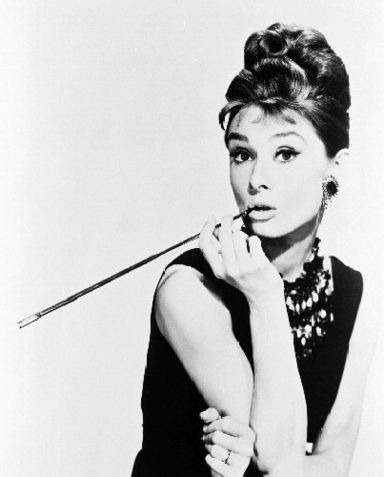
Now, whenever I see that classic picture of Audrey Hepburn, dripping with jewellery, beautifully coiffured and attired, and chic cigarette holder in hand, I won't be thinking sophistication, charm, and wit. I'll be thinking empty-headed, irritating bimbo. I'm not sure I ever want to hear Moon River again (even if Katie Melua is singing it). I just hope I can watch Roman Holiday again without Holly Golightly popping up in my mind. I may just have to watch Robin and Marian as an antidote.

Sunday, November 30, 2008

Mamma Mia

OK, I admit it. When I was younger, I liked Abba. I had posters on my bedroom wall and all, until Agnetha got displaced by Princess Leia in 1977. (Yeah, I liked the music too. It wasn't just her butt. I was twelve, OK?) And I'm quite partial to Bollywood movies. I like the visual style and the sheer exuberance of the dance sequences. So I figured what the hell, let's give Mamma Mia a shot. Even if it has got Meryl bloody Streep in it. (She was good in Sophie's Choice, but I've found it almost impossible to watch her in anything else since.) It looks like a Western Bollywood movie, so it has to be worth a look.

Oh dear. Oh dear, oh dear, oh dear.

The production design is brilliant, and I bet it was a hell of a lot of fun to make, but the cast absolutely butcher the music. They're actors, not singers, and it shows, painfully. They can't dance either, and the choreography is mostly uninspired anyway. (Though admittedly, as I got drunker, the dance numbers got funnier.) Julie Walters singing Chiquitita while wiping Meryl Streep's nose is something I wish I could erase from my memory. I used to love that song. Now it's tainted. Does Your Mother Know has become a MILF song, and now makes me faintly nauseous, And please, God, I never want to see Meryl Streep in dungarees playing air guitar ever, ever, ever again.

As forthe script and the story, well, let's just just say that I'm male, middle-aged and heterosexual, and it wasn't written with me in mind. I mean, just look at the casting. Colin "Mr Darcy" Firth and Pierce "007" Brosnan, all of whom spend pretty much the entire movie in beachwear. And yes, ladies, they both end up in wet white shirts. That kinda tells you who they expect in the audience.


I can imagine it'd be a lot of fun going to see it as the token straight guy with a bunch of female and gay friends. Start off with some outrageously priced cocktails in a suitable club, preferably something that looks like one of Carmen Miranda's hats, with loads of fruit and umbrellas, and get right royally ripped. Somewhere along the line, let yourself be persuaded to be assaulted with eyeliner and lipstick, and hope the photos don't end up on Flickr. Then treat it as a Rocky Horror type singalong movie, and end the night at a drag show or getting even more smashed with a DVD of Priscilla, Queen of the Desert. They do Abba properly. (Just remember to take the eyeliner off before you go to work the next day, guys. Listen to the voice of experience here.)

Under any other circumstances, though, I can't imagine myself ever watching Mamma Mia again. But I have to confess, I watched it through to the cheesy end,despite everything. Even the credits. Draw whatever conclusions you like from that. But it's worth sticking with it just to watch Meryl Streep delivering the most emotional and heartfelt performance of The Winner Takes It All you will ever see. Damn. I wish I hadn't just admitted that in public. Oh well...

Monday, November 24, 2008

Méliès the Magician

One of the DVDs that lives by my TV for occasional inspiration is Méliès the Magician, a compilation of very early special effects films by one of the most amazing pioneers of film. I've been pondering a bunch of new machinima projects, and I'm toying with the idea of recreating a load of his films using Moviestorm, just for the fun of playing with special effects and learning how to do them.

Many of his 500+ films are really short (under a minute) and are just there to show off a trick. Méliès was originally a stage magician, and his aim was to bring the same sense of wonder to the screen. He used multiple exposures, split screen, glass painting, stop motion, miniatures, and animation to achieve all sorts of things that had never been seen before, and became standard film techniques ever after. I quite fancy the idea of developing the same range of skills he had, and at the same time paying homage to one of the greatest film makers of all time.

Georges Méliès, 1861 - 1938

From the description on play.com:

Melies` Magic Show: These magnificently restored prints are a dream-like journey into the world of Georges Melies. The 15 films demonstrate the breadth of his command of different genres, including trick film, spectacle, burlesque and fantasy.

Titles included:

1. The Four Troublesome Heads (1898)
2. A Trip To The Moon (1902)
3. The Infernal Cakewalk (1903)
4. The Scheming Gambler's Paradise (1905)
5. The Music Lover (1903)
6. The Infernal Boiling Pot (1903)
7. The Man With The Rubber Head (1901)
8. Playing Cards (1904)
9. Hilarious Poker (1905)
10. The Devilish Tenant (1909)
11. Untameable Whiskers (1904)
12. Imperceptible Transmutations (1904)
13. Bluebeard (1901)
14. Fat And Lean Wrestling Match (1900)
15. The One-Man Band (1900)

Saturday, November 1, 2008

Halloween in Times Square

It's 7.30 am in Manhattan, I've had four hours sleep, I'm jet-lagged and there's no coffee in this hotel room. I may have to get up and go and find some shortly.

I'm in NY for the Machinima FilmFest 2008. The flight was great. I normally like to fly Virgin, because of their inflight entertainment system. Well, BA have finally got around to putting in some good entertainment too, and it made the trip a whole lot better than usual. I didn't even open my book, let alone listen to any of the podcasts I was going to catch up on. (Sorry, Phil!)

I thoroughly enjoyed Speed Racer. It's the sort of cheesy special effects kids movie that I normally hate, but this was just what I needed at the time. It had elements of Spy Kids, and Matthew Reilly's Hovercar Racer, it's made by the Wachowskis, and it has John Goodman in it. It has that hyper-real CG style, with primary colours, and completely OTT visuals, the racing scenes are ridiculously cartoony, and it's obviously completely tongue in cheek. Great fun, as long as you're not expecting anything too serious. And, ashamed though I am to say it, it actually made me want to play the game.


For a complete change of pace, I then watched Tashan, a Bollywood thriller. Well, not so much a thriller as a comedy gangster caper movie. OK, OK, I'll admit it, I only picked it because it has the lovely Kareena Kapoor in it, but I'm glad I did, not only because she's very easy on the eye. It has a great story, full of twists and turns, and uses that wonderful narrative device of having characters talk straight to camera, interspersed with flashback. And it has exotic locations, great dances, and some good action scenes. The subtitles are unintentionally (I think) hilarious, especially as much of the film is about speaking English. As lead character Jimmy Cliff says, "Here even Hindi is spoken with an English accent." It has bags of style - Tashan means "style" - and was a great way to pass the rest of the flight. One to buy when I get home.


Johnnie and I got to our hotel on Madison Avenue mid-evening, and I realised I'd forgotten to bring mobile numbers for just about everyone I know in the USA, so we failed to hook up with any of the other machinima crowd. So instead, we took a walk three blocks into Times Square and watched the Halloween partygoers, at which point I realised I'd left my bloody camera in the hotel so I can't show you any of the fantastic costumes. Let's just say neither of us was looking at the Manhattan architecture. Sorry, peeps.

I did wonder why I kept getting admiring glances, and was feeling rather flattered until Johnnie punctured my ego by pointing out that I was wearing my usual Stetson and trenchcoat, so everyone assumed I was in costume. Not my devilishly handsome good looks making an impression on the young ladies of New York then. Shucks.

We ended up in the Heartland Brewery, where the beer was truly fantastic.* The Red Rooster was punchy and toffee-flavoured, and then we sampled the Smiling Pumpkin, which is indeed made with pumpkins, and flavoured with ginger, cloves, vanilla, and so on. We then noticed that they do a sampler where you can try small quantities of half a dozen different beers, and wished we'd gone for that instead. However, by this time we'd been up for 20 hours, it was starting to feel like 5am, and the need for sleep was kicking in, so we had to pass on the rest of their selection.

And now the sun has risen over the Manhattan skyline, and I've realised I forgot the cable for the camera so I can't show you that either. Damn, damn, damn. So instead, here's another picture of Kareena Kapoor in Tashan. Much, much prettier than skyscrapers.

Reminds me of Salma Hayek in Desperado. Which can't be bad.

Edit: now I'm home, here's the skyscrapers.

*A quick aside to some of you European beer snobs. Not all American beers are Budweiser, Coors or Miller. Some of my very favourite beers are American. Don't knock them till you try them.

Monday, October 27, 2008

More from the King

Another few quotes from King Vidor:
I wouldn't even approach a documentary film on a factual basis. Facts need to be interpreted.... Film is an art form and must not be inhibited by anyone else's interpretation of how you might behave or how an event happened. There is no correct interpretation of a historical happening.
Given my life-long rant about "inaccurate" Hollywood movies, such as U-571, I found myself surprisingly in agreement with this sentiment. The next one is about sex and violence in the movies.
Whenever someone [complains] about some strongly sex-oriented film, I usually reply, "Who twisted your arm to make you see it?" I explain that there are many ways to find out about a film before going to the theater. And the truth is that these people know what the film is about, but afterwards try to rationalise their voyeurism by finding a scapegoat to ease their own conditioned consciences.
And lastly, the supremely arrogant but insightful:
I recently received a letter from a student fan who asked me to name someone who had had the greatest influence on my work. For an opener, I wrote "David Wark Griffith", but then I realised that Griffith would have to take second place. The person who influenced my work more than anyone else was King Vidor.

Sunday, October 26, 2008

You have the camera

I've been reading King Vidor on Film. It's mostly fairly run of the mill stuff, but this paragraph jumped out at me.

You have the camera. Take it and run with it. Hold the camera upside down if you want to, run the film backwards if you feel like it, shoot in color or black and white, or mix the two together if this says something for you. Underexpose or overexpose or throw the lens out of focus. Run at any speed the camera will accommodate and light the scenes with candles and don't pay any attention to what I have to say or anyone else. You are the first person who has ever done what you are doing. No one has ever done it before. You are photographing ideas and feelings, not words.

Tuesday, October 14, 2008

Macbeth's Disciple

One of our very first clients when we started Short Fuze five years ago was a little London-based outfit called Spearean. They commissioned us to design a PS2 game based on Shakespeare's Macbeth, but with a strong historical context. Sadly, it never got off the ground, which is a shame, because it had some damn good ideas in it. But now they've used some of those ideas and made a short movie, Macbeth's Disciple, which is premiering on London in early November.

I'm really pleased for them, but gutted I can't make it as I'll be in New York at the Machinima Festival. Dave & I wish Jasmin the very best of luck.

Come and See

Some of the very best films I've ever seen are so powerful and so emotional that I really don't want to see them again. Come and See is one of those. It's a Soviet-era Belorussian movie from 1985, set in the Second World War. It would be wrong to describe it as a war film, though. It's a coming of age film, centred around a 12-year old boy, Florya, who joins the partisans.


Most reviewers describe it as a brutal film. I didn't see it that way. I found it harrowing. It wasn't a film about the horrors of war. It was a film about what happens if you live in a world where life is cheap and meaningless, and where everyone around you has resorted to savagery and barbarism. In contrast to films such as Saving Private Ryan, Born on the Fourth of July, Platoon, or Full Metal Jacket, there is very little voyeuristic or explicit carnage. The violence mostly happens off camera. We're more interested in the after-effects than the actual events. The one scene where we do actually see something happen, where a detachment of SS Einsatztruppe destroy a village, is quite horrific. Not because of what happens to the villagers, but because of the casual, unconcerned looks on the faces of the Germans looking on.


It's a stunning film, in every sense of the word. It leaves you numb, shell-shocked, and reeling. And it's excellently made in every department. Top marks have to go to the young Aleksei Kravchenko. His performance is simply astonishing. Director Elem Klimov made life hell for his cast to get them to give of their best. They shot for nine months in the swamps and forests, dragging the cast and crew through mud and rain, and for added realism he used live ammunition.


The photography is reminiscent of Werner Herzog's psychological work, such as Aguirre and Woyzeck. There are lots of long, slow, static, silent shots, where the story is told with facial expressions or simple head movements. At times, as I often find with Herzog, I found it almost painfully slow, but editing it faster would have lost the intensity required to immerse you in Florya's world. This is particularly the case after the first battle scene, where the sound work is probably some of the best on film. After an artillery attack, Florya is deafened, and all we hear for the next few scenes is the ringing in his ears and some muffled voices. The sense of isolation - another hallmark of much of Herzog's work - is quite eerie, and as Florya's hearing is slowly restored, we find ourselves drawn back into a macabre world that is somehow changed.

I can't say I enjoyed the film. As with much Russian cinema (more accurately, Soviet cinema), it was bleak, raw, and uncomfortable. It's what Russians do best - just read most of the great Russian literature from the early 19th century onwards; it's either light comedy or depressing as hell. Their operas fit into the same pattern. (Please, Lord, let me never sit through another performance of Boris Godunov.)

But Come and See isn't a film you watch to enjoy. Like Sophie's Choice or Christiane F, this is a film you watch to see the world through the eyes of another. Afterwards you feel relief that you don't live like that, and determination that you will do anything you can to prevent such a world happening again. See it, and feel how powerful film can be.

Monday, October 13, 2008

Repo! The Genetic Opera

This looks like a fun film.

In the year 2056 - the not so distant future - an epidemic of organ failures devastates the planet. Out of the tragedy, a savior emerges: GeneCo, a biotech company that offers organ transplants… for a price. Those who miss their payments are scheduled for repossession and hunted by villainous Repo Men. In a world where surgery addicts are hooked on painkilling drugs and murder is sanctioned by law, a sheltered young girl searches for the cure to her own rare disease as well as information about her family’s mysterious history. After being sucked into the haunting world of GeneCo, she is unable to turn back, as all of her questions will be answered at the wildly anticipated spectacular event: The Genetic Opera.

It's a stylish SF musical with Anthony Head and bucketloads of attitude, which is always a good sign. And, erm, Paris Hilton. And Sarah Brightman. Yeah, I know, but I still want to see it.

Trailer here.

Sunday, October 5, 2008

Mongoose Overdrive

Every so often, a week comes along that just throws things at you from every which direction, and doesn't stop till you beg for mercy. Well, to be truthful, it doesn't even stop then. This has been one of them.

Some of the highlights of this week have included:
  • Being asked to be a judge at the Machinima Expo
  • Being asked to be a judge for a design competition at Long Road 6th Form College
  • Having a movie I worked on as technical consultant (Leaving the Game) get nominated for an award for technical achievement at this year's machinima festival
  • Having one of my photos, a picture of Reality Checkpoint on Parker's Piece, selected as part of a guide to Cambridge
  • Meeting a whole bunch of interesting people at a conference and being asked for help using Moviestorm in some very cool and socially rewarding ways
  • Getting invited to do a screening and workshops at one upcoming UK film festival, and being asked to speak at another
  • Meeting a British Vice-Consul based in San Francisco, discovering he knew who I was and what I do, and being asked to go out there and speak
  • Finding my photo in a local photographer's online gallery - Gordon Tant, who took the picture of my hat that I'm now using as my avatar
  • Doing some of the most creative personal work I've done in ages as a result of some random research turning up some extremely surprising things
Scene from Leaving the Game (American Film Institute, Kuma Reality Games, Short Fuze, Cartoon Network, Disney, IBM, Microsoft, Method, Georgia Tech, Furnace Media, and others, 2007)

It's also been a good week for catching up with old friends, and making new ones, especially via Twitter and Facebook. My son got his first job, washing up in a local restaurant, saving up so he can build himself a computer. We had some great Moviestorm movies, including the marvellous Star Wars Election 08, and it looks like I'll finally be getting around to some podcasting again. It seems as if everything I've been doing for the last 18 months is finally coming together.

More weeks like this, please. With the aid of Red Bull (and Stolichnaya) I'll be just fine. I'll sleep in November, after the Machinima Festival in NY...

Reality Checkpoint, Cambridge, 2007

Thursday, October 2, 2008

It only encourages them

(This is pretty much an unedited transcript of a rant I had in the office yesterday. If four-letter words offend you, shut your eyes when you read them.)

As you might expect for a company on the periphery of the movie world, the office Skype chat at Short Fuze is filled with news of upcoming movies. Most of the time, this is greeted with groans, wailing and gnashing of teeth as we find out about yet another sequel, remake, or adaptation. This week the screams of total anguish hit record levels as we found out about Blade Runner 2. (Or in my case, the remake of Angel Heart.)

"Why, oh why, do they have to fuck with my favourite film / book / comic / TV show?" the assembled crowd shout out every time we hear about another of these movies. "It's going to be dreadful, you can't better the original, why can't they think of anything original these days... blah blah Phantom Menace blah blah..."

Well, people, it's your own damn fault. So you're all gonna hate Blade Runner 2, right? On principle. (Except Chris, who stuck up for it.) So why the hell is it, when I ask you if you're going to see it, you say "Well, yes, it is Blade Runner, after all." That's why they make these shit-awful movies. Because people like you will give them money to see them, even if you don't bloody like them. (Hands up all those who went to see Star Wars Eps 2 & 3 even though they hated them. Matrix 2 & 3? Spiderman 2? Resident Evil? Doom? Yeah, you know who you are.)

My youngest daughter, who's now ten, has gone through all the usual obsessions of a modern Western girl. Winnie the Pooh, Teletubbies, Barbie, Bratz, High School Musical, and so on. And like all kids, she's a sucker for merchandise. If she sees something with her current favourite brand on, she immediately wants it, even if she doesn't actually want the item in question. "Look, Daddy, a rectal thermometer for a hamster, can I have it? It's pink and it's got Barbie Sleeping Beauty on it, pleeeease! It's only £17.99...." And if she had her own money, she'd damn well buy it too, even though she hasn't even got a bloody hamster. The only thing that stops her handing over all her money to Mattel and Disney is the fact that she hasn't actually got any. I'm just hoping she grows out of it by the time she's old enough to have a credit card.

And how exactly is that different from people who go and see a movie they know they won't like, just because it has a tenuous relationship to a movie (or book, film, or game) they do like? It's not a film, it's a piece of merchandise made by the film industry, and you fell for it. Why do they fuck with your favourite film? Because they will make money. They're not in it for the art. They don't give a shit about the characters, the worlds, or the stories you love. They're a business, and if they can get away with selling you crap, they'll make crap, and laugh all the way to the bank.

Now, before you all jump on me and accuse me of saying we shouldn't make sequels, we shouldn't remake films, and we shouldn't adapt things, that's not what I'm saying at all. Some sequels are great (Aliens, the second two Indy movies, Bride of Frankenstein), and some remakes work really well (The Grudge, Peter Jackson's King Kong*, Magnificent Seven). And the film industry has a long and proud tradition of adapting from other media (Jungle Book, Lolita, Treasure of the Sierra Madre, Chocolat, Throne of Blood). When done well, these make really enjoyable films. There's nothing wrong from an artistic point of view with sequels, remakes & adaptations, provided they're made with love and respect.** There's just something wrong with an artistic culture that seemingly can't think of anything else and treats its source material and audience so cynically.

However, If you look back at the history of Hollywood, from about 1930 onwards, only about 20%-25% of films have ever been based on completely original scripts. About 30%-35% are adaptations of books, and the rest are a mixture of remakes, sequels, and adaptations from other media. The change we're seeing now, though, is that nearly all the top budget and high profile films are drawn from the latter category, and fewer and fewer are originals. That's because they're comparatively low risk. If a studio sinks $75m into making a Blade Runner sequel, they can be pretty certain there are ten million Blade Runner fanboys out there who'll go and see it (and then buy the DVD, and while they're at it, buy the re-issued original yet again, and then buy the box set, and the director's cut special edition with the limited edition postcards in, and the new action figures, yadda yadda yadda) that they will be certain to make their money back. And the fan networks will do their advertising for them. (Like I am, right now, by so publicly ranting about it. Guilty.) But if the studio puts that $75m into making exactly the same script but without the Blade Runner name on it, they'll have an uphill struggle to convince people to go and see it, they won't do as well out of merchandising rights, and they could well lose money. So from a pure business point of view, it's a no-brainer.

(Compare that with Bollywood or the European film industry where there are relatively few sequels etc, and the whole business is very different. But that's a post for another day.)

Rant nearly over. Thanks for sticking with me this far.

Here's the message. It's a simple one.

If you don't like the fucking film, don't go and see it.

And quit bitching. Nobody's making you watch those movies except you.

If we, the public, stop giving Hollywood money for their lame-brain exploitative knock-offs, they'll eventually stop making them. That's the only language they understand. There are thousands of brilliant, original, almost unknown movies out there. Go and see one of them instead, and show some independent film-maker who's pouring his heart and soul into a movie that what he's doing is far more worthwhile than some pointless $100m special effects extravaganza.

Or, to quote Lloyd Kaufman, boss of Troma, make your own damn movie!

(I think that's my Hollywood career over before it's begun. Unless maybe those Miramax fucks will have me?)

*Yes, I do actually quite like Jackson's King Kong. It has its flaws (editing, Peter, it's where you cut out the boring bits and keep the tension up), and I still prefer the original, but it works as a film, and it speaks to the modern generation with as much depth as the original spoke to me. What comes across is that Jackson made his version of Kong with love and respect, and he wasn't just banging out a cheap money-grabber like Dino de Laurentiis did. Now that's a shit remake.

** And in general, I'd prefer to see an adaptation or remake of something I don't already know. Many times I've watched a film, thoroughly enjoyed it, and only then seen the words "Based on the novel by..." If I already know the source, I'm immediately comparing it to the film as I watch it, and start asking myself why they did it that way, which isn't nearly as much fun.

Wednesday, September 3, 2008

What do movie people do?

So you're looking for a gig working on a low budget movie. The ad looks pretty exciting. But what do those words actually mean?

The LA Grind has the (true) answer. For example:
Assistant Director
Implied Position & Responsibilities: Create schedules, keep crew and director on schedule for the day, contacting late crew members, sending out tomorrow’s schedule.
Actual Low Budget Requirements/Expectations: Assist the director by getting coffee, dry cleaning, picking up food for the rest of the crew.
Stop banging your head on the desk, Johnnie. It is funny.

Thursday, August 7, 2008

Sleeping Beauty

A couple of nights ago I took my daughters to the cinema to watch a ballet. Sounds weird, but it worked rather well. There was none of the stuffy atmosphere you get if you actually go to Covent Garden, and we had a better view than you could ever get in person. It wasn't like watching it on TV either - the big screen transformed the experience into something rather wonderful.


What we saw was a BBC film of the 2006 Royal Ballet production of Sleeping Beauty. The performance itself was magnificent and magical, traditional ballet at its very finest. It was the classic Petipa choreography which was the way the ballet was first staged, way back in 1890. The costumes and sets were a truly sumptuous rococo fantasy, almost as if they'd got Elton John to do the production design. (Actually, it was Oliver Messel. No, I didn't know who he was either until I googled him.)

Sleeping Beauty is a real crowd-pleaser of a ballet. Old Tchaikovksy really knew what he was doing when it came to that kind of entertainment. It's utterly undemanding - we all know the storyline - and it provides opportunities for lots of short showpiece moments as each of the fairies gets to have their moment in the spotlight. And, of course, it's full of tunes we all recognise, even if only from the Disney film. It's been twenty-odd years since last time I was at a ballet, and this was an easy and pleasant way to remember why I used to enjoy it. And, of course, a great show for the girls.

Given pretty much my sole experience of ballet on screen has been watching The Red Shoes on TV, I wasn't sure what to expect. However, the film worked surprisingly well. Being able to get in really close meant that for the first time, I could actually see their facial expressions. It wasn't like being several hundred feet away, straining to see a tiny figure on a huge stage between the heads of the people in front. Every sensuous movement of cloth was captured perfectly, every detail of the dancing came through.


I really didn't expect to enjoy the show nearly as much as I did. But now I'm thinking, maybe Romeo and Juliet next week?

Monday, July 14, 2008

Movie Mogul Mongoose

Waiting for me in the office today was my long-awaited Whisperer in Darkness T-shirt. Long-awaited, I should stress, not because of any fault on their part. No, I foolishly ordered a small one, which would have looked fine on Charlize Theron but not, alas, on me. So I sent it back to California and those good folks at the H.P. Lovecraft Historical Society replaced it, free, with a big one.

This is not me. Strictly speaking, it's not my T-shirt either. But I do now have one very much like it. And quite a similar beard. But less hair.

But it's not just a T-shirt. No-sirree. This is a gen-you-whine symbol of me investing in a movie. I gave them the princely sum of twenty bucks towards making Whisperer, and in return, they gave me a T-shirt. Which, I'm sure you agree, makes me a fully paid-up film financier, movie mogul, and all-around alliterative altruist. Seriously, though, their movie of Call of Cthulhu was so damn bloody brilliant (I may have mentioned this before?) that I'm really looking forward to Whisperer more than any other film I can think of, and I have absolutely no qualms about bunging Sean and his crew a few dollars towards it. (Trailer here.)

For thoroughly deranged Cthulhu clothing, though, there's this or this. Warning, looking at these may very well drive you insane. So don't.

Saturday, July 12, 2008

Looking for cast & crew, Bristol, August

My mate Phil "Snouty" South, who teaches at the Bristol Old Vic Theatre School, is shooting a quick'n'dirty guerilla movie in and around Bristol this August, and is currently on the look-out for cast & crew. (RealFilm, not machinima.)

"The loose idea is to make a 10 minute video for YouTube which is kickass good and showcases big old me and of course anyone who helps. I'm thinking a sort of Hitchcock movie but with a 21st Century punk/goth flavour. You know, the kind of stuff I like. :) instead of Mount Rushmore it ends on the Suspension Bridge..."

Should be a 3-4 day shoot. If you're interested in taking part, drop by his blog, Snouty's Diary Creme, and scribble in the comments. I'll be there if it doesn't clash with Dragon*Con.

One, please

It's generally accepted that going to the cinema is a social occasion. It's not about just going to see a movie. It's about going out with your mates or your family, eating popcorn, and generally making a night of it. And, of course, going to the pub afterwards (or MacDonalds if you're with the kids) and chatting about how it was so much better/worse than you expected.

But it's not quite so, it seems.

People who buy more than six cinema tickets a year tend to go on their own, according to research from Edinburgh University. It's kinda logical when you think about it. People who go to the flicks that often aren't just going for the blockbusters that everyone wants to see on the big screen. They're the ones who want to see all sorts of things, usually the things their friends and family aren't into. So yeah, going to Indiana Jones or Harry Potter is probably a social occasion, but going to Persepolis or Mongol probably isn't.

I've always felt faintly awkward and embarrassed about going to the cinema on my own. I don't want to be the one guy at a movie who hasn't got anyone to go with. And particularly now that I'm in the process of getting used to being single again, putting myself in situations where that's exacerbated is something I try and avoid. If there's something I want to see, I try and find someone who wants to see it too, and if nobody else wants to go, I end up waiting for the DVD.

But all of a sudden the idea of going on my own doesn't feel nearly so odd. When it comes to the out of the ordinary films that I want to see at the cinema, it's reassuring to know that most of the rest of the audience will be like me, there for the pure pleasure of watching a movie on a big screen.

Picturehouse, here I come!