Saturday, August 8, 2009

Glamour (n): false or superficial beauty


Last night I saw Breakfast at Tiffany's for the first time. Hard to believe, perhaps, but I've managed to miss it every time it's on TV, and I never quite got round to watching in on DVD.

All I knew about it was Audrey Hepburn's iconic little black dress. I didn't know the story, the characters, or anything. But I knew it was one of those must-see films: whenever I told people I hadn't seen it, they reacted in complete shock. Apparently, not seeing Breakfast at Tiffany's is an admission of being a soulless Philistine with no appreciation of romance, and you can't call yourself a film buff until you've checked it off your list. It is, after all, one of the all-time great movies.

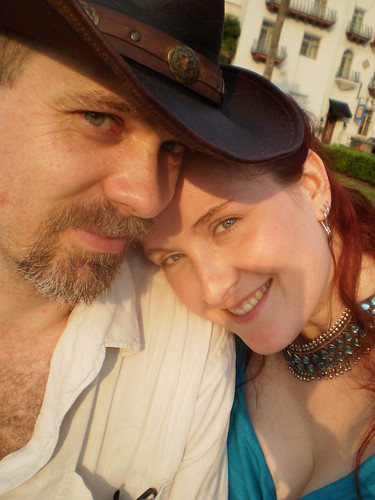
So when they had a "Date Night" at Leu Gardens in Orlando and were showing it outdoors on a big screen, I figured this would be the perfect opportunity to go with my fiancee to see this romantic comedy classic of Hollywood glamour. What better circumstances in which to see it?

Photo from The Orlando Buzz

Well, what a disappointment. The let-down I felt watching Citizen Kane was nothing compared to the complete lack of emotional response I got from Breakfast at Tiffany's. Kane was obviously a great film for its day, full of technical and cinematographic innovations from a talented young director. Breakfast at Tiffany's was a very ordinary comedy full of thoroughly dislikeable characters. George Peppard was OK, and Mancini's Oscar-winning music was good, but Mickey Rooney's "comic" Japanese character was thoroughly vile, and Audrey Hepburn's character, Holly Golightly, made me want to slap her in the face.


Glamour, let us not forget, is an illusion, and Hollywood glamour doubly so. Audrey Hepburn's chic 1961 socialite is a phoney. She's a vain, self-centred, thoughtless, shallow, lazy, drunken, amoral trollop who thinks nothing of getting men to pay for her decadent lifestyle and taking their money, and then has the gall to call them rats when they expect anything of her in return. The heroine of this movie, who has somehow become a global icon, is a runaway called Lula May who's mixed up in a Mafia drug ring, rude to her neighbours, and has nothing on her mind other than the next party and who she can persuade to buy her expensive presents. Her "breakfast at Tiffany's" involves standing outside at dawn, staggering home drunk, while scoffing a greasy take-away. That's the reality behind this icon of the silver screen.


Why's it seen as such a great film? Honestly, I don't know, but as one friend put it, it's the American fairytale: even a brainless redneck can make it in the big city. Or, to put it another way, if you just take whatever you want, as long as you're stylish, you can have it, and there's no need to worry about the consequences for anyone else.

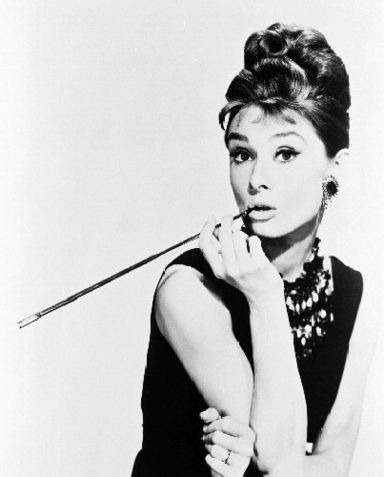
Now, whenever I see that classic picture of Audrey Hepburn, dripping with jewellery, beautifully coiffured and attired, and chic cigarette holder in hand, I won't be thinking sophistication, charm, and wit. I'll be thinking empty-headed, irritating bimbo. I'm not sure I ever want to hear Moon River again (even if Katie Melua is singing it). I just hope I can watch Roman Holiday again without Holly Golightly popping up in my mind. I may just have to watch Robin and Marian as an antidote.

Wednesday, July 29, 2009

Darn it, foiled again

I thought about remaking Harvey in machinima, but Moviestorm doesn't have an invisible rabbit character.

"I've wrestled with reality for 30 years, and I'm glad to say, I've finally won."

Wednesday, July 8, 2009

Fast, cheap, good - choose six

When I first started in the software industry, back in the Late Bronze Age or thereabouts, there was a maxim that was drummed into me.

"Fast, Cheap, Good - choose two."

In other words, there's always a trade-off. You do things fast, then it'll be expensive if you want it done well. You want top quality, then expect to pay for it, or expect to wait. Do it cheap, and you'll either get something shoddy or it'll take ages. That's as true now as it was then, and it doesn't just apply to software.

Of course, the client never wants to hear that. They want all three, and the sales guy has probably promised them everything under the sun, with a cherry on top and a singing telegram on their birthday thrown in. The task of the poor bastard who has to deliver the project is to get the client to decide what compromises he's going to make. It's a total bitch of a job, but you just have to do it, or you're doomed to failure.

But in this brave new internet world, that rule has not just gone out of the window, but leapt from a twentieth floor balcony and splattered on the pavement two hundred feet below. We don't just want fast, cheap and good. We want it now, we want it bloody brilliant, and we want it free.

Actually, we demand it. It's our right as consumers, isn't it?

Every day, my inbox has several aggrieved messages wanting to know why we charge for Moviestorm content packs. Never mind that we're giving away a complete movie-making toolkit, completely free, with no restrictions as to what you can do with the movies you make. That's pretty much taken for granted. People get really upset, and often extremely angry that the add-on packs aren't free as well.

In some cases, they're just trying it on, seeing if they can get a freebie. Those people just get a polite brush-off unless they're a really deserving case. Some are just trolling. But others seem to have a genuine sense of moral outrage that we're a business and we're asking them for money. I regularly get people telling me how much better it would be if we gave everything away, as then we'd have many more users. Usually followed by the suggestion that we should offer much more as well. (And then the inevitable suggestion that we should pay users for downloading our product as this would be great advertising for us.) Then come the comparisons that usually take no account of price: your inbuilt video editor is crap, Final Cut Pro is much better - why don't you offer everything in FCP but make it free? No shit, Sherlock! That bit of our free tool isn't as good as a thousand buck specialist pro tool? Really?

Trying to be reasonable, and explaining that we're working on things as fast as we can, and that we charge because we have wages to pay, servers to run, and so on, usually falls on completely deaf ears. As often as not, it provokes a torrent of abuse and invective.

The scary thing is that we're all becoming more guilty of this attitude. I'm not really talking about Moviestorm here. That's just the example I took because I know it so well. We're so used to free services and free software that we regard it as the norm, and we expect it to work perfectly all the time. Look at the complete outrage when twitter fails, for example. Look how angry we get when an update to Firefox doesn't go as planned. When Facebook made changes, the users almost rioted. And when Google went off air for nearly an hour, it was as if the world had ended. It wasn't the advertisers who pay Google who got most upset: it was ordinary users who are just used to having Google there whenever they need it.


The reason for this is pretty damn obvious. Some time back in the dotcom boom, investors had this great idea that the "real" value in a company was in having lots of users. (Or eyeballs, as we called them back then.) When you had lots of users, you'd find a way to get money from them somehow. So don't charge, bulk your user numbers up fast, and flog the company for silly money. Of course, a ten year old can see the flaw in this. People will happily use your stuff for free, but as soon as they have to pay, they'll look for someone else who's giving things away for free. And when you have an entire economy based on this principle, then there's always plenty of free stuff around, so nobody pays for anything, and they can usually pick and choose between several competing free options.

Ten years of this, and you end up with two problems. First, a fucked up economy with a lot of bankrupt companies and burnt investors. And second, a population that is used to the idea that everything should be free, and doesn't see why they should pay for anything.

Yeah, we'd all like superb, free software. I'd also like a free Harley-Davidson, free first class flights to anywhere in the world, and free champagne, too. And a pony.

Sure, take advantage of what's on offer. But some time soon, we're all going to have to adjust to the fact that things really aren't free - or if they are, then they come at a price. (You want to watch free videos on YouTube? Then be prepared to sit through commercials.) We may - if we're lucky - actually get to a stage where we can have things that are fast, cheap, and good. There are a hell of a lot of really inexpensive, well-made little apps around. Giving them ten bucks if you find it useful seems perfectly reasonable. But don't go bitching if the free stuff ain't as good as the paid-for stuff, or if it takes time to get it right.

Remember... "Fast, Cheap, Good - choose two."

Saturday, June 13, 2009

On a personal note


I got engaged yesterday.

Sunday, June 7, 2009

Look, see


Yeah, that's pretty much what this is blog about. Make your own at wordle.net.

Thursday, May 28, 2009

How 3D changes film: thoughts on Coraline

I've never really been a fan of 3D movies. It's always seemed to me like a gimmick, just an excuse to poke things in the audience's face and make them go "oooh", without actually adding anything of interest to the film. But watching Coraline in 3D yesterday has made me begin to change my mind. It actually seems to nearly work.

Before I get stuck into some of the filmic details, I should just say that wearing the 3D glasses is a pain. The glasses themselves are damn good, way better than the old cardboard red/blue ones, and the 3D image is uncannily good, with a great sense of depth. Without my regular glasses, however, I find it hard to see the screen as crisply as I would like. It's not that I can't see properly, but my tired middle-aged eyes do find everything a bit blurry. And these modern 3D glasses, while all very slick, aren't really compatible with my specs. Now it may be that some of the visual issues I experience wouldn't affect me if I had 20/20 vision, but I don't, and neither do a lot of the rest of the population.


For me, the shots that worked best in 3D weren't the effects shots where things come out of the screen at you. I mainly found them tawdry and predictable. What worked well were the shots where they just added depth, and created a heightened sense of realism. Looking out through woods over a valley to Coraline's house (don't worry, no spoilers) looked truly amazing, and for the first time I got a sense of how flat 2D films and photographs actually are by comparison. What was odd, though, was having to relearn how to see. From birth, we're naturally used to focusing our eyes at the distance of the object we're looking at, and we actually have quite a narrow depth of field. As a result, when we shift our point of view from a near object to a faraway object, our eyes move and deform to get the right focus. However, in a 3D film, the objects aren't at the distance you think they are, and so you find yourself focusing on the wrong place. (Which is, I should add, made worse by the aforementioned glasses problem.) If the entire scene is in focus, but feels 3D, you have to learn not to refocus your eyes as you look around the image on the screen.


It's worth a slight digression here on how 3D works. It's not actually 3D, it's stereoscopic, and it's an optical illusion. The glasses are used to split the image on the screen, so each eye sees the world from a slightly different angle, as if it were looking at a real object. However, all you're looking at is a flat image (or two flat images if it helps to think of it that way). Everything you see is at the same distance - in my case, about ten rows or thirty feet away, so to get optimum focus, you should always focus at 30 feet.

Hence the confusion your visual system (eyes and brain) suffers: those hands that appear to be just inches away are in fact thirty feet away, and the trees outside the window that appear to be a hundred yards away are also thirty feet away. As a result, your brain doesn't know where to look to get the best view. And, more confusingly, as you move your head side to side, you can't get a different view of what's in front of you - you'll never see the back of Dad's hand, no matter where you stand. It ain't real. It's an illusion.


Which leads me to the second major issue, that of focus in the film itself. Over the last 80-odd years, we developed a grammar of film that we all naturally understand. Essentially, the thing that's in focus is the thing you should look at. That's how you direct your audience's view around a 2D image. But in a 3D world, it feels odd that there should exist parts of the world that you can't focus on, no matter how you try. In the real world, your focus is where you are directing your vision. You've never experienced a world where you can't control the focus. When you watch a 3D film, you feel you're looking into a "real" environment, even in a puppet show like Coraline, and using focus adds a strange and unexpected level of artificiality that makes you aware that this is still a film construct, not a miniature world.

It's even stranger when they rack focus during a shot. In the 2D world, we're used to this bit of film grammar. First we focus on Fred, and then as Jo speaks her lines, we focus on her. But in the 3D world, we're not used to having our focus pulled around in this way, and our brains have to work out what's going on. The result is quite disorienting at times, only momentarily, perhaps, but that's enough to interfere with your sense of relaxed viewing and with your total involvement in the story.

Staying with the theme of disorientation, cutting styles in 3D are something else that you need to relearn how to interpret. We're all used to cuts in films, whether they're from person to person, as in a dialogue, or from a long shot to an close shot. We've spent tens of thousands of hours getting used to watching it, and we know what it means. (And anyone who's ever done any editing will know only too well what it takes to learn to do it right, and how unwatchable it can be if you do it wrong.) In 3D, though, the experience is quite different, because of the heightened level of immersion. You suddenly go from looking down on a world, to being in it, or you teleport from one position in the world to another one. Again, it may be only momentary, but that's enough to make the narrative feel jerky. In a fast-cut sequence, where you may be changing your viewpoint every second or two, that's enough to make it completely unintelligible.

So, what does this mean for movies?

At times, watching Coraline, I felt like the early film audiences must have felt watching D.W. Griffith films, trying to make sense of his cutting style. It reminded me what it was like playing my first 3D first person shooter games.

Today, I saw the exact same movie trailers I saw yesterday, but this time in 2D. That really threw into sharp relief what works in 3D, and what doesn't.

I think we're going to have to develop new forms of cinematography for 3D if we're going to make it work. When it works, it's amazing. I found myself watching Dark Crystal today and thinking how incredible it would look in 3D. But we're going to have to adapt the rules of film to the new medium. We have to re-understand how to use focus; we have to come up with less confusing ways of cutting; we have to work out which shots work best in 3D, and how to composite the frame differently. And, perhaps most importantly, we have to drop the gimmicky shots that are only there to show the audience we can shove stuff in their faces. Do we really need any more tyrannosaurs leaping out of the screen right at us?

The technology is damn near there now, after over half a century of experimentation. What needs to happen next is for film-makers to learn how to use it effectively.

Oh, my review of Coraline? Go see it. Go see it in a cinema, in 3D, while you still can. Don't wait for the DVD and watch it at home, you'll be missing out. I nearly did.

Destroy the galaxy!

So there we were last weekend, happily photographing M-109, which as I'm sure you all know isn't a German WW2 fighter plane, but is in fact a barred spiral galaxy approximately 46 million light-years away in the constellation Ursa Major, when Rhys decides he needs a pee. So seeing as it was bloody dark, what with it being the middle of the night in the middle of nowhere, Paul gives him a green laser to light his way as far as the hedge. Well, what do you expect when you give a teenager a laser? Rhys waves the laser around, right across the view of the telescope. Which ruined the picture.


Or did it?