Friday, August 14, 2009

Ring of Time

Nuove Terra's Ring of Time by squirrellygirl is a machinima series that gives me a sense of pride. Not because I had anything to do with it, but because of what it represents.

When Dave and I started Moviestorm, many years ago, we had a saying: "In the 20th century, everyone had a book in them: in the 21st century, everyone's got a movie in them." We had this crazy idea that bands would use Moviestorm to make their own videos, and authors would use Moviestorm to bring their stories to life. Ring of Time is one such.


Shirley Martin wrote the book, and self-published it on Lulu. A 600-page epic, it's the sort of thing that may get picked up by a publisher or not, depending on the vagaries of the business.

In the beginning there were three worlds, until the creation of a fourth magical world. This is the world of Nuove Terra. A world in which all magic and mythical creatures exist. It is into this world that twin children Sam and Sarah Donovan are thrust. On a chilly September evening figures cloaked in blood red robes descend on their suburban home and change their lives forever. Gone are thier parents and with them any sense of comfort and family. In order to find out what happened the children must learn to fit into this strange new world and with that learn to use magic. Together with their new friends, Pat and Melinda, as well as a strange, eccentric wizard, a werewolf who works for the Magical Creature Protection Agency, and a dragon who teaches history the children begin to unravel the hidden past of their parents and the secrets behind the Ring of Time.

She then decided to turn the story into a series using Moviestorm and iClone.

Now, to be fair, there are a lot of rough edges in this. It's competent, but it doesn't have the polish of a professional production. Story-wise, it's easy to dismiss it as a Harry Potter clone, but by the end of the first episode, you can see that it is going in a different direction. It's clearly a labour of love, though. She's been working on this first episode for about six months, and it's been fascinating watching it come together.

However, the quality isn't the point. The important thing is that machinima has given Shirley a way to bring her story to another medium and a new audience. Filming that story as live action would be prohibitively expensive; filming it as machinima is comparatively quick and easy. Just as the word processor and the internet has allowed aspiring authors to bypass the traditional publishing business, machinima and the internet allows them to bypass the entire film and tv production and distribution business.

So that's why I get a happy glow when I watch Ring of Time. In our own small way, Dave and I have helped Shirley do something that probably wouldn't have been possible a decade ago. And, better still, she won't be the only one. I'm sure we'll see more squirrellygirls telling more stories based on their own novels. And I, for one, would far rather spend an evening with stories told by ordinary people who are passionate about their art, whatever their flaws, than with uninspired stories created by corporate mass entertainment machines.

Y'know, I might even buy the book. I don't care if it's not as good as Stephen King or J.K. Rowling or whoever. Hell, it's not a huge outlay, and that book would have more meaning to me than a DVD of another crappy TV series or identikit by-the-numbers novel. And that, it seems to me, is what this is all about. I wouldn't have heard of Ring of Time if it hadn't been for the machinima. And neither, I suspect, would you. But maybe, just maybe, you're intrigued enough now to click on some links, and maybe watch it for yourself. And maybe even take a look at the book. And just possibly, put a few dollars into an author's pocket. That'd be a win.

Wednesday, August 12, 2009

Ibn Battuta: Beyond Cinedome

The more time I spend messing around with movies, the more I fall in love with the tried and trusted format of a nice, simple 16:9 aspect ratio 2D film, on a screen that fills my field of vision without overwhelming it. Too often, I find that alternative formats don't tell the story as well. They're gimmicks, beloved of film-makers, and the films made with them exist primarily to show off the format, not to tell a story.

I've said my piece about 3D. Today, it's the turn of the ultra-big screen. On Monday, I went to the Dr Phillips CineDome in the Orlando Science Center, which claims to be "the world's largest Iwerks domed theater and Digistar II planetarium, with 28,000 watts of digital sound." The screen is 8 storeys high, and it's like sitting inside half an eggshell. Walking into it is a bizarre experience, as it makes you feel slightly nauseous. The roof is a long, long way above you, and the shape of the dome utterly screws with your sense of perspective. You climb what feels like several flights of stairs to your seat, sit back, and wonder where to look.


We'd come to see Ibn Battuta's Journey to Mecca, a documentary based on the travels of the famous 14th century Moroccan explorer. Ibn Battuta's always been a hero of mine, and I've always been fascinated by the hajj, the Islamic pilgrimage to Mecca that every Muslim should make once in a lifetime. This documentary, narrated by Ben Kingsley, retraces his journey, and combines it with footage shot inside the Great Mosque, something which I will never be allowed to see in person. Let me just quote the introduction to the movie:
Ibn Battuta, the famed 14th century Moroccan traveler, set out in 1325 from his native Tangier on an epic journey to Mecca, the historical and cultural center of Islam. By the time he returned 29 years later, he had traveled the world from West Africa, Spain and India to China and the Maldives, covering some 75,000 miles and three times further than Marco Polo. At the instigation of the Sultan of Morocco, Ibn Battuta dictated his reminiscences, which became one of the world’s most famous travel books, The Rihla.
Journey to Mecca is an IMAX® dramatic and documentary feature, filmed in Saudi Arabia and Morocco in both English and Arabic, with background Berber. The film tells the amazing story of Ibn Battuta, the greatest explorer of the Old World, following his first pilgrimage between 1325 and 1326 from Tangier to Mecca. His perilous journey resonates with adventure while presenting an unforgettable picture of Islamic civilization during the 14th century, culminating with Battuta’s first Hajj.
The story is book-ended by a close-up look at the contemporary Hajj, a pilgrimage to Mecca that draws three million Muslims from around the world every year who perform rituals that have taken place for over 1,400 years.
The Hajj, the longest running congregation of humans annually on planet earth, is definitely a unique experience for the medium. For non-Muslims it is the closest they will ever come to witnessing this extraordinary event, and for Muslims it takes on an even deeper significance.
In terms of the content, this was a fascinating, engrossing, and beautiful film. However, I would have preferred it as a straightforward documentary. I spent most of the movie wondering where to look: in front of me, to my left, to my right, straight up? I felt overwhelmed. If you want to show me the planets or deep sea, then sure, overwhelm me. And yes, the shots of the desert worked really well. But the shots of people didn't. I don't need to see a face forty feet high to pick up the emotion it's conveying. The result was that instead of feeling part of what was going on, I felt distanced and uninvolved. Unlike a TV screen, which you look at, or a cinema screen, which you look into (to quote veteran film editor Walter Murch), you look around a dome. You can't possibly take it all in, and you're aware that something's always happening out of your field of view. The skill of the film-maker is to direct your view to the most important thing on the screen. In a dome, you're in control where you look, and the chances are you're looking in the wrong place - or, which is just as bad - you feel you're looking in the wrong place.

Worse than that, the camera angles were unbearably strange. Every shot seemed to be a tracking helicopter shot, trying to show me huge vistas, panning over everything. The image was always in motion. To show a caravan plodding through the desert, we started on a shot of the ground, swung upwards onto a person, along a line of people, then up, up, until we could see just how many there were, then - BAM! - back onto another detail, pulling out, and swooshing the camera around. The effect was disorienting and incoherent, and, frankly, not nearly as effective as similar shots in Eisenstein's Ivan the Terrible or Lean's Lawrence of Arabia. When you get close into a crowd, the effect of the dome is that you have the tops of people's heads above you and all about you, as if they're standing on the walls and the ceiling. If you're looking at the side of the image, the distortion when it starts to move is quite unnerving, and you start to wonder if someone's spiked your drink with something.

The whole point of a surround screen is that you can move your head - the cameraman doesn't need to be your eyes in the same way he would in a normal screen film. Moving the camera is like moving the world, and your audience can't settle when you're shifting the world around.


The overall impression I came away with was that they were so focused on trying to make use of the sheer scale of the IMAX format that they forgot they were trying to tell a story. IMAX works best when you want to awe people with the immensity of what you're showing them. Particularly in a dome, just show the audience something huge, hold the camera absolutely still for a while, and let them look around at their own speed, and take in the details of what they're most interested in while you talk to them about what they're seeing. They'll nudge each other and point out cool stuff. It's spectacle, not film as we know it.

There was a lot to like about Journey to Mecca, and I'm glad to have seen it. It was a real treat to see the shots of the Ka'bah, and the images of the desert were truly jaw-dropping. But on balance, it's a deeply flawed movie. The story sections, while interesting, simply didn't work on the giant dome screen, and the camerawork was way too busy for that size of screen. It leaves me wondering whether IMAX is suitable for anything other than nature documentaries. I suspect not.

Saturday, August 8, 2009

Glamour (n): false or superficial beauty


Last night I saw Breakfast at Tiffany's for the first time. Hard to believe, perhaps, but I've managed to miss it every time it's on TV, and I never quite got round to watching in on DVD.

All I knew about it was Audrey Hepburn's iconic little black dress. I didn't know the story, the characters, or anything. But I knew it was one of those must-see films: whenever I told people I hadn't seen it, they reacted in complete shock. Apparently, not seeing Breakfast at Tiffany's is an admission of being a soulless Philistine with no appreciation of romance, and you can't call yourself a film buff until you've checked it off your list. It is, after all, one of the all-time great movies.

So when they had a "Date Night" at Leu Gardens in Orlando and were showing it outdoors on a big screen, I figured this would be the perfect opportunity to go with my fiancee to see this romantic comedy classic of Hollywood glamour. What better circumstances in which to see it?

Photo from The Orlando Buzz

Well, what a disappointment. The let-down I felt watching Citizen Kane was nothing compared to the complete lack of emotional response I got from Breakfast at Tiffany's. Kane was obviously a great film for its day, full of technical and cinematographic innovations from a talented young director. Breakfast at Tiffany's was a very ordinary comedy full of thoroughly dislikeable characters. George Peppard was OK, and Mancini's Oscar-winning music was good, but Mickey Rooney's "comic" Japanese character was thoroughly vile, and Audrey Hepburn's character, Holly Golightly, made me want to slap her in the face.


Glamour, let us not forget, is an illusion, and Hollywood glamour doubly so. Audrey Hepburn's chic 1961 socialite is a phoney. She's a vain, self-centred, thoughtless, shallow, lazy, drunken, amoral trollop who thinks nothing of getting men to pay for her decadent lifestyle and taking their money, and then has the gall to call them rats when they expect anything of her in return. The heroine of this movie, who has somehow become a global icon, is a runaway called Lula May who's mixed up in a Mafia drug ring, rude to her neighbours, and has nothing on her mind other than the next party and who she can persuade to buy her expensive presents. Her "breakfast at Tiffany's" involves standing outside at dawn, staggering home drunk, while scoffing a greasy take-away. That's the reality behind this icon of the silver screen.


Why's it seen as such a great film? Honestly, I don't know, but as one friend put it, it's the American fairytale: even a brainless redneck can make it in the big city. Or, to put it another way, if you just take whatever you want, as long as you're stylish, you can have it, and there's no need to worry about the consequences for anyone else.

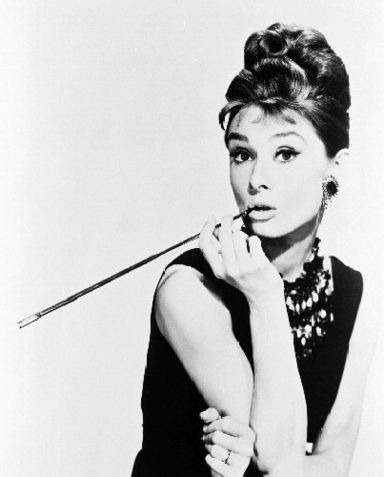
Now, whenever I see that classic picture of Audrey Hepburn, dripping with jewellery, beautifully coiffured and attired, and chic cigarette holder in hand, I won't be thinking sophistication, charm, and wit. I'll be thinking empty-headed, irritating bimbo. I'm not sure I ever want to hear Moon River again (even if Katie Melua is singing it). I just hope I can watch Roman Holiday again without Holly Golightly popping up in my mind. I may just have to watch Robin and Marian as an antidote.

Wednesday, July 29, 2009

Darn it, foiled again

I thought about remaking Harvey in machinima, but Moviestorm doesn't have an invisible rabbit character.

"I've wrestled with reality for 30 years, and I'm glad to say, I've finally won."

Wednesday, July 8, 2009

Fast, cheap, good - choose six

When I first started in the software industry, back in the Late Bronze Age or thereabouts, there was a maxim that was drummed into me.

"Fast, Cheap, Good - choose two."

In other words, there's always a trade-off. You do things fast, then it'll be expensive if you want it done well. You want top quality, then expect to pay for it, or expect to wait. Do it cheap, and you'll either get something shoddy or it'll take ages. That's as true now as it was then, and it doesn't just apply to software.

Of course, the client never wants to hear that. They want all three, and the sales guy has probably promised them everything under the sun, with a cherry on top and a singing telegram on their birthday thrown in. The task of the poor bastard who has to deliver the project is to get the client to decide what compromises he's going to make. It's a total bitch of a job, but you just have to do it, or you're doomed to failure.

But in this brave new internet world, that rule has not just gone out of the window, but leapt from a twentieth floor balcony and splattered on the pavement two hundred feet below. We don't just want fast, cheap and good. We want it now, we want it bloody brilliant, and we want it free.

Actually, we demand it. It's our right as consumers, isn't it?

Every day, my inbox has several aggrieved messages wanting to know why we charge for Moviestorm content packs. Never mind that we're giving away a complete movie-making toolkit, completely free, with no restrictions as to what you can do with the movies you make. That's pretty much taken for granted. People get really upset, and often extremely angry that the add-on packs aren't free as well.

In some cases, they're just trying it on, seeing if they can get a freebie. Those people just get a polite brush-off unless they're a really deserving case. Some are just trolling. But others seem to have a genuine sense of moral outrage that we're a business and we're asking them for money. I regularly get people telling me how much better it would be if we gave everything away, as then we'd have many more users. Usually followed by the suggestion that we should offer much more as well. (And then the inevitable suggestion that we should pay users for downloading our product as this would be great advertising for us.) Then come the comparisons that usually take no account of price: your inbuilt video editor is crap, Final Cut Pro is much better - why don't you offer everything in FCP but make it free? No shit, Sherlock! That bit of our free tool isn't as good as a thousand buck specialist pro tool? Really?

Trying to be reasonable, and explaining that we're working on things as fast as we can, and that we charge because we have wages to pay, servers to run, and so on, usually falls on completely deaf ears. As often as not, it provokes a torrent of abuse and invective.

The scary thing is that we're all becoming more guilty of this attitude. I'm not really talking about Moviestorm here. That's just the example I took because I know it so well. We're so used to free services and free software that we regard it as the norm, and we expect it to work perfectly all the time. Look at the complete outrage when twitter fails, for example. Look how angry we get when an update to Firefox doesn't go as planned. When Facebook made changes, the users almost rioted. And when Google went off air for nearly an hour, it was as if the world had ended. It wasn't the advertisers who pay Google who got most upset: it was ordinary users who are just used to having Google there whenever they need it.


The reason for this is pretty damn obvious. Some time back in the dotcom boom, investors had this great idea that the "real" value in a company was in having lots of users. (Or eyeballs, as we called them back then.) When you had lots of users, you'd find a way to get money from them somehow. So don't charge, bulk your user numbers up fast, and flog the company for silly money. Of course, a ten year old can see the flaw in this. People will happily use your stuff for free, but as soon as they have to pay, they'll look for someone else who's giving things away for free. And when you have an entire economy based on this principle, then there's always plenty of free stuff around, so nobody pays for anything, and they can usually pick and choose between several competing free options.

Ten years of this, and you end up with two problems. First, a fucked up economy with a lot of bankrupt companies and burnt investors. And second, a population that is used to the idea that everything should be free, and doesn't see why they should pay for anything.

Yeah, we'd all like superb, free software. I'd also like a free Harley-Davidson, free first class flights to anywhere in the world, and free champagne, too. And a pony.

Sure, take advantage of what's on offer. But some time soon, we're all going to have to adjust to the fact that things really aren't free - or if they are, then they come at a price. (You want to watch free videos on YouTube? Then be prepared to sit through commercials.) We may - if we're lucky - actually get to a stage where we can have things that are fast, cheap, and good. There are a hell of a lot of really inexpensive, well-made little apps around. Giving them ten bucks if you find it useful seems perfectly reasonable. But don't go bitching if the free stuff ain't as good as the paid-for stuff, or if it takes time to get it right.

Remember... "Fast, Cheap, Good - choose two."

Saturday, June 13, 2009

On a personal note


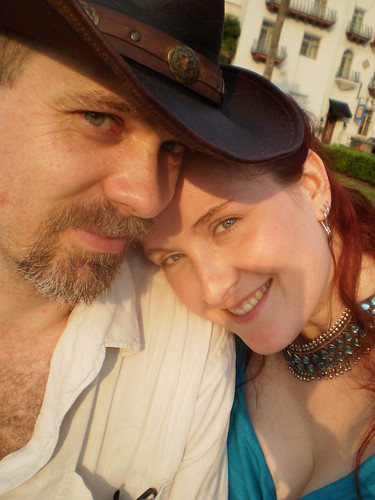
I got engaged yesterday.

Sunday, June 7, 2009

Look, see


Yeah, that's pretty much what this is blog about. Make your own at wordle.net.