Saturday, November 17, 2012

My ambition is to be a beach bum

I think I've come to the conclusion that my ambition in life is to be a beach bum.

Now, for the benefit of potential employers and others, let me clarify. I don't mean a shiftless, lazy beach bum like Patrick Swayze in Point Break or some college drop-out. I mean a beach bum like Hemingway or Jimmy Buffett, who manage to combine being stunningly creative with spending a lot of time lazing around in or near the water.

I don't have the hair for this these days.

I'm serious. I think I'd do really well with Hemingway's Key West lifestyle. Start work at dawn, six days a week, and write until "seven hundred words or lunch, whichever comes sooner." Then do something relaxing all afternoon. For him, it was fishing or sailing; for me, it would probably involve walking along the water's edge and finding a shady place to sit with a book and/or a guitar. Then in the evening, go out and meet people - and, most importantly, listen to them. I'd love to throw some of Buffett's exploration into the mix as well - his journeys through South America and the Caribbean are both fascinating and inspirational.

Hemingway's writing room, Key West. I could work there/
 I think I could be stunningly productive living that way - and I'd be incredibly happy. It's worth remembering that Hemingway wrote just nineteen books in his life, ten of which were written in his twelve years in the Keys. That's less than one a year, which is a fairly modest output by modern standards. (And he managed just nine books in the other thirty years of his working life.) Seven hundred words is a lot when you're typing, but it's a lot easier with a word processor when you can edit as you go.

It's not unusual to retire to the coast. I'd like to get there sooner than that. I was brought up on the South coast of England, and I miss having the sea close by. Palm trees and sandy beaches make me happy. I'm not looking to spend my life in an alcoholic daze or searching for a perfect wave like some aging hippy. I want to find that perfect environment with the combination of relaxation and stimulation, work and play, where my creativity can let rip. Don't get me wrong, I love the Jungle House, and it's by far the best place I've ever lived, but honestly... I'd rather be on the beach.

Friday, October 26, 2012

Three Kingdoms Full Of Crazies

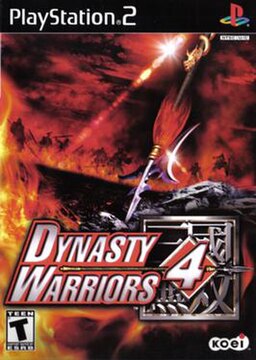
I've been a huge fan of Dynasty Warriors since the very first day I saw a prototype PlayStation 2 in Cannes, back in early 2000. I've been playing them again recently, and decided to delve a little further into the actual source material it's based on.

I was aware that all the characters and events are based on historical characters and events, but I didn't really know much about them.  I'll be honest: I didn't know the difference between the Warring States and the Three Kingdoms periods. (The Warring States was 475-221 BC, the Three Kingdoms was 220-280 AD - about half a millenium apart. To put in perspective, that's roughly the difference between Buddha and Jesus, or between Jesus and Mohammed. But that's irrelevant.)


I started by reading the epic Romance of the Three Kingdoms, on which DW is based. ROTK is a terrifyingly long book - four volumes of really small print. It was written in the Ming Dynasty, some 1400 years after the actual events. (Again, putting it into perspective, that's a similar time gap as in Shakespeare's Julius Caesar  and Antony and Cleopatra.)

It's important to realize that ROTK is not a history. It's a novel based on actual events, and it's about as accurate as watching Tarantino's Inglourious Basterds and treating it as a documentary. Author Luo Guanzhong invented characters, changed events, added some bits of mythology, and generally slanted everything to make it into a good story. (If you're interested, here's a list of what he just plain made up - and that doesn't include the bits he dramatized for literary purposes.)


So I then started looking at the real history.

All I can say is that China was, apparently, overrun by total psychopaths for about a century.

What's fascinating is that they all claimed to be adhering to a deep moral code, Confucianism, which is based on loyalty to one's superiors. And yet, they were the most untrustworthy, disloyal, backstabbing and pernicious bastards you can imagine. The entire period is characterized by people turning on their lords and friends, betrayals, deceit, and opportunism. Anything is permissible in the pursuit of power. Today's allies are tomorrow's enemies, and your reward for helping someone is likely to be your own execution.

Liu Bei: changed sides several times, lost countless battles, and became emperor for two years.
And the scale of the slaughter is unimaginable. At the end of the Han period (220AD), the population of China was around 60 million. By the time the Jin Dynasty supplanted the Three Kingdoms, the population was reduced to 12 million. That's an incredible 80% of the population killed by war, famine or disease. (Once again, some perspective: in World War 2, China lost around 20 million people - less than 4% of the population. Britain lost 2% of its population in World War 1, and that was seen as devastating. The Rwandan genocide killed off 10% of the population. Even the Black Death only managed to kill 30% of the population. The nearest equivalent is the Paraguayan War of 1864-70, during which the Paraguayan population was reduced from around 900,000 to 220,00, of whom only 28,000 were adult males.)

It's almost impossible to imagine a world where 8 out of every 10 people is dead. Almost all the adult males are gone, and all that's left are women, children, and old people. It's like something out of a post-apocalyptic nightmare.

In fact, it IS a post-apocalyptic nightmare.

Zhang Fei: drunken killer who murdered his wife and children to prove his loyalty, and lost countless battles - and tens of thousands of troops - through being too inebriated to follow orders. 


Not only were the warlords ruthless with the lives of their men in battle, their personal cruelty and bloodthirstiness was staggering. There are numerous accounts of when one lord would execute another - and would then also kill his entire family, his household, his servants, his retainers, and all their families. Literally thousands of people would be executed. Mass executions of prisoners were commonplace. Scorched earth policies were the norm, even if this left the population with no food and no option but to resort to cannibalism. Even their own families weren't safe from these psychos: apparently Zhang Fei and Guan Yu were so eager to prove that they were completely committed to their attack on another warlord and weren't distracted by thoughts of home that they murdered their own wives and children. In another incident, Liu Bei needs lodgings for the night, but the guy he stays with has no food, so he kills and cooks his wife and daughter. Liu Bei, far from being horrified by this, is impressed with the man's devotion and rewards him handsomely.


Lu Bu: crazy killer who murdered Ding Yuan, the man he regarded as his adopted father, in order to ingratiate himself with Dong Zhuo. He was then adopted by Dong Zhuo, and Lu Bu murdered him too. 


And those - let me stress - are the so-called good guys. Their opponents, Dong Zhuo, Cao Cao, Lu Bu and others, are just as bad. The only thing they apparently know how to do is to kill and destroy, and they all hope to be the last man standing.

What's really bizarre is that these nutjobs have a strange respect for one another. Time and again, after some calamitous, pointless battle in which tens of thousands of soldiers are killed and maimed, the loser surrenders and is rewarded by the victor, while his defeated army is decapitated en masse. The common people are worthless, but their rulers are treated with godlike reverence. As one of them points out, Confucius says that "the law does not apply to the man of greatness." And then, a short while later, they'll be trying to kill each other again, whether by assassination, poison, or raising more huge armies to start another war.

Guan Yu: changed sides to fight against his friends.  Regarded as the epitome of loyalty, and  was deified. He is still worshiped today throughout China. 
It's clear that none of them was fit to govern a chicken coop, let alone an empire. Under their rule, China was brought to its knees.   In any normal, sane society they'd be vilified as insane lunatics. They're as bad as Pol Pot, Hitler, Genghis Khan, Attila the Hun, Idi Amin, or Stalin. And yet, they're widely seen as heroes - both at the time, when ROTK was written, and today.

I think I'll go and play Final Fantasy instead. Sometimes it doesn't do to read history.

Thursday, July 26, 2012

The Muse


“The professional does not wait for inspiration; he acts in anticipation of it. He knows that when the Muse sees his butt in the chair, she will deliver.”
 - Steven Pressfield


Tuesday, July 24, 2012

Bathroom reading


Has there been any research into reading ebooks on the toilet? Serious question.

What I want to know is how many people read while taking a dump, and whether that's been affected by ebooks. At the risk of the TMI zone, I always kept books in my toilet, mostly cartoons or humour, or else I'd take New Scientist or Private Eye in with me. Now, I don't. I have a phone, which means I have my entire Kindle library and the whole Internet to read.

Teach 'em young.

Look, I know I'm not the only one. Henry Miller maintained that reading in the toilet was the only way to appreciate Ulysses. Saint Gregory, way back in the Middle Ages, declared that the toilet high in a castle turret provided the best place for uninterrupted reading. There is research on reading paper books on the toilet, though it's mostly about hygiene. One survey I found a reference to (but no link) said that the New Yorker discovered in the 90s that people who read on the toilet were more likely to be graduates than people who didn't. And whenever I'm out in a public place and have to visit a restroom, I can hear the clicks and beeps of people reading, texting, or browsing on their phones emanating from the cubicles.

However, what interests me is to find how e-books have changed people's bathroom reading habits. We know that people read more often in lunch breaks than they used to, and are now more likely to read e-books than magazines while waiting for buses or trains. It's now easy to use those small snippets of time for reading, and there's plenty of research to support that. But there's precious little about what happens in the smallest room. Has it affected the market for bathroom books? Is this why the short short story is set to make a comeback? Do publishers now need to think more about the toilet as a normal reading environment if they want to understand their readers? Or are we all posting on Facebook or reading Twitter while we poop?

It's a subject crying out for research, and it has real commercial implications.

It's okay, I'm an anthropologist. I'm allowed to think about these things.

(And no, I'm not writing this in the toilet, but I could have. For all I know, you're reading it there.)

Tuesday, July 3, 2012

Nationality


Today I'm sitting in my house in Florida writing up an interview about previsualization with a guy in London, proofing books about voodoo, chaos magic, and alien conspiracies created by teams in Pakistan, the Philippines and Singapore, in between phone/Skype meetings with people in India and Sweden about ways for small publishers to promote their e-books and chatting with colleagues in New York and Arizona, while listening to Turkish techno, Mozambican jazz and South American bhangra. It's amazing how far around the world my tendrils reach without me really being aware of it.

Nationality seems like a very outmoded concept these days.

So later tonight, I shall go and watch people of Spanish descent blow up a load of Chinese fireworks, eat Mexican food, and drink Irish beer in order to celebrate America not being part of Britain. Makes perfect sense.

Tuesday, June 12, 2012

The hidden morality of Facebook

There are many, many reasons to dislike Facebook. However, I think that despite its flaws, it's a pretty amazing thing. It's enabling us to communicate more than ever before, and to share our lives in ways that were unimaginable when I was growing up.

What's emerging from Facebook is an incredible piece of accidental social engineering: the way it's being used to disseminate what, for want of a better word, I'm calling morality. It's not just about the pictures of food and cats, the links to music or blog posts, and the endless trolling. It's actually spreading and reinforcing ideas in new, unexpected ways.

Gifting

Back in the early days of FB, gifting apps were all the rage. You sent someone a picture from a collection - dragons, famous paintings, game characters, or whatever. Your friend could then send pictures from that collection to you or other people, and in return, you unlocked more pictures.

It was a nice, simple way to promote the idea of gifting: you could spend time choosing which picture would be most appropriate to individual friends, and it didn't cost anything except a bit of time and thought. Interestingly, the apps that did best were the ones that had the most to unlock. The ones that gave you everything to start with weren't successful. My guess is that what people liked most was the reward for having made a gift - it wasn't just the altruism of making a gift that engaged people, it was the fact that you got something back for having done something for someone.

Gifting apps aren't popular these days: it's easier just to share pictures with everyone, or post them on someone's timeline. Still, it was an interesting first step in a simple social culture economy - to get something, you first have to give something, and receiving something is an invitation to participate in gift-giving.

Collaborating

Shortly after the gifts, we got the collaborative games. These were of two main types: there were the games which relied on you having a "network": the more people who you persuaded to join, the stronger you became.


These promoted the idea of cooperation: you help me, and I'll help you - something that's missing from many games.  The other type were the games where you got rewards for helping your friends build whatever they were building: if you cleaned out their fish tank or weeded their garden, you could buy more things for your own fish tank or garden. Like the gifting apps, these didn't cost the other person anything: the rewards simply came from the system. These weren't altruistic actions, they were things you did for your own benefit, but which happened to be structured as win/win actions.

Despite their very limited interactivity - just a few clicks and little or no direct interaction - they all carry a common message. You can't achieve what you need on your own: you will do better by helping others. In a world dominated by the message of self-reliance and looking after number one, it's an interesting way to spread the idea that cooperation often beats independence.

Reinforcing

The most recent trend is in sharing pictures that consist of a simple motto on a pretty background. Most people wouldn't share the sayings as simple text, but once you put them on a picture, they apparently magically become inspirational and worth sharing.

I have to admit, I get fed up of these - in some ways, it feels like schoolkids standing up in class and spouting a piece of simplistic philosophy that everyone is bound to agree with and the rest of the class applauding them. "I think everyone should be nice to each other - who agrees with me?" Well, who's going to be the one who says no, other than the class troll?


However, what fascinates me about this trend is that these pictures perform two simple functions, and they do it rather elegantly, even though it's a very clumsy mechanism. First, they enable someone to express how they're feeling without having to go into specifics or find the words: it's the equivalent of putting on a piece of music to express a mood.

More interestingly, though, is that they are used to express our shared values as a culture, and that the individual is publicly identifying themselves with those values. Society as personified by the mainstream media likes to push capitalism, consumerism, and individualism: life's about getting ahead, buying new things, or keeping up with fads. Most of these pictures express the simpler, less tangible things in life: friendship, personal growth, joy, or hope. When someone shares a thought like this and their friends "like" them in response, it reinforces the values that they embody, and reminds us all that these values are as important - if not more important - than getting a bigger TV, coveting the newest phone, or whatever some reality TV star has been up to.

Social morality

Social media has a unique way of reaching out to people and getting them to express what really matters to them. These apps, games and pictures aren't a sophisticated way to express these values, but that's actually part of the beauty of them. Anyone can do it - you don't need to be an orator, a writer, a poet, a musician or an artist. You just have to click a button or two, and you can share your thoughts - even if your thoughts are merely "that sentiment resonates with me." 

Undoubtedly a lot of what people say is crap - just like real life. But I think there's a subtle undercurrent that's building up: across the world, people are showing that they have a desire to share, that they have a desire to cooperate, and that what they value most isn't wealth or goods, it's more abstract things like friendship, kindness, and community.

And that's a pretty good message to spread around the world, isn't it? 


Friday, May 25, 2012

Bookstores: misplaced nostalgia?


I love bookstores, but the widespread feeling about how wonderful they are (or were) seems to me to be more myth than reality. There's a romantic image of bookstores as magical places where you can have a wonderful experience chatting with a bookstore owner who just happens to share all your preferences and knows the same subject areas as you, and can lay her hands instantly on the perfect book you were unknowingly searching for, guaranteed to please.


That just ain't so.

Most of the time, my local bookstores didn't actually stock the book I wanted: they'd have to order it, and it would take anything from a week to a few months. Very rarely did anyone actively recommend me a book: unless I was a regular, they'd usually sit there watching as I browsed, and then take my money in silence if I chose to buy something. If I asked for a book on a particular subject, they often didn't have a clue. That's not a complaint, just an observation: it's not really surprising when you're asking for something really specialist, say, a book on the political machinations in the Punjab leading up to the First Sikh War: they'll simply say, "we have a history section there, and a military section there, and maybe you could try the travel section under India." I don't expect them to know everything, but let's not pretend that bookstores were staffed by omniscient beings who could instantly refer you, with the unerring sense of Buffy's Giles, to the one book that you need, no matter how obscure the subject. If I could find a good specialist bookstore, then sure, they were often great, but that could involve travelling 200 miles and an entire day's journey, just to track down one book.


I'll miss bookstores for the smell, for the ambience, and for the pleasure of browsing through actual books, but not, I'm afraid, for the service they provide. Sadly, Amazon has them beat on that, and there's no point pretending otherwise. It was the same for record shops, and the same for video shops. Most of them were just racks of a small selection of product, staffed by people who didn't really know much about the sort of books, music or films that interested me, and which couldn't compete with online services for range of product, serendipitous discovery, qualified recommendations, speed of service, convenience, or price. It's sad to see bookstores closing, and the implications for the book trade and for readers are scary, but the truth is that in most cases, Amazon just do the job far, far better.