Sunday, April 22, 2012
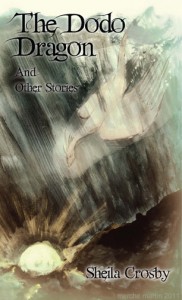
The Dodo Dragon and other stories
I've always enjoyed sci-fi shorts, particularly the sort of thing that appeared in magazines in the 50s & 60s, and in anthologies edited by Ellison, Sheckley, et al. This collection reminds me very much of those.
There are three types of story in here. Several of them are excuses for really bad puns. Asimov used to do a lot of those, and you either love 'em or hate 'em. I loved them. They're basically shaggy dog stories for sci-fi geeks. Then there are a few light humor stories. Again, these are a staple of the genre, and they work well. I enjoyed these; they're well written and the author's quirky sense of humor and witty writing comes through. Finally, there are a couple of more serious stories. I have to admit, they're well written, but I didn't enjoy them as much, with the exception of the title story, which is both sad and beautiful.
However, that's what I expect, and indeed demand, from short story collections: a mixed bag of writing, some of which will be to my taste, and some won't, and it's a great opportunity to showcase the breadth of what a writer can do. I've read a couple of her stories elsewhere, and it's been good to find more of her work that I enjoy.
Recommended for lovers of post-war sci-fi. They're perfect bedtime (or bathroom) reading.
Available on Kindle
Friday, March 30, 2012
Goodbye, Hukilau: why I'm no longer running a digital publisher
As of this weekend, I’m no longer in the e-book publishing
business. I’ve enjoyed it, but I don’t see it as something that’s worth pursuing any longer, and I've handed the keys to Hukilau over to someone else.
There are two main reasons for this. This isn't a blame game or an excuse: it's just the way the market has developed, and it's both a curse and a blessing.
Reason 1: writers don’t need digital
publishers any more
When we started Hukilau, it wasn’t easy to get an e-book
published. The tools were arcane, the formats were obscure, and the submission
processes were tortuous. You could go it alone, but you needed to be pretty
tech-savvy and persistent just to get your book into the retail channels. We
offered people the opportunity to side-step all that. They gave us their books
in whatever format they had, and we’d get them out onto the Web sites with no
effort on their part. It was a useful role, and it bridged the gap between the
author and the retailer in a simple, understandable way.
Now, though, it’s dead simple to publish your own
e-books. There are a range of really simple
formatting tools around, and places like Smashwords will even accept your Word
file, so you don’t have to know anything at all about e-book formatting to get your
book onto Kindles, Nooks and iPads the world over. It takes literally ten minutes to put your
book on Amazon or Smashwords after the first time you’ve done it. There’s
simply no need for a publisher to get involved.
Incidentally,
I don’t think of places like Smashwords as publishers in the traditional sense.
They’re distribution services for self-publishers. They don’t curate their content in
any way, or promote anything they handle – the two things that in my mind
define a digital publisher. What Smashwords and their ilk provide is a public
conduit that allows anyone to get their books onto the major retailers with
minimal friction. It's a great service, but it's not the same as a publisher.
Writers make better promoters than publishers anyway
When it comes to promotion, it’s become clear that self-promotion
by individual authors is just as successful as publisher promotion for the
majority of titles. Unless the publisher is prepared to pay out for a major
marketing campaign and start putting ads on the sides of buses to attract new
users, there’s very little they can do anyway. Readers are more interested in
what their friends, other readers, bloggers, and the author themselves have to
say than any PR from a publisher.
This
is nothing new – the vast majority of successful authors have always been the
ones with a gift for self-publicity. What’s new is that there is now a huge and
vibrant community that allows people to promote themselves for free. Most
authors would do better to spend their time getting active on Facebook,
Twitter, Google+, the blogosphere, and Goodreads for an hour or two a day,
rather than signing up with a publisher and hoping they will be able to
magically create interest.
And let’s face it, publishers just don’t have the same level
of interest in a book as the author. A publisher wins by having a large enough
catalog to make a decent aggregate income. Most of the individual books in
their catalog just don’t matter. Publishers are looking for the big winners and
will be happy with small returns from the majority of their titles, and they
won’t spend time pushing something that’s not doing well. They’ll just move on
to the next new book. Authors, on the other hand, care passionately about every
one of their books, and will give them as much attention as they can.
An author has to ask, “what exactly can a
publisher do for me that I can’t do better and more cost-effectively
myself?” Looking at it from an author’s
point of view, I have to shake my head and answer, “I honestly don’t know.” I can’t see any reason to give away a
sizeable chunk of my earnings to someone simply for submitting a document to a
Web site and listing me in their catalog. If I’m going to go with a publisher, they’ll
have to provide me with editing services, cover artwork, and promotion.
Under those circumstances, I didn’t feel it was right to
continue offering those services to authors under what felt like false
pretences.
It’s actually a pretty amazing state for authors to be in.
You don’t need publishers any more. The world is out there, and you have
everything you need to get your book in front of people. So go, publish, and
make your dreams come true.
Reason 2: there’s no money in
it
With all the amazing sales figures we’re seeing from the
e-book market, you’d have thought digital publishing was a lucrative business.
Sadly, it’s just not so.
Let’s look at a few hard numbers.
In our recent promo, we shipped
nearly 10,000 books in a week. At our usual $2.99 price point, that would break
down as roughly $3,400 to the retailers, $3,300 to the authors, and $3,300 for
us. Less our running costs, the three of
us would have made $1,000 each. That’s not bad for a week’s work, and if we’d
been able to sustain that every week, we’d have made a passable living.
But that’s a tough order. 10,000 books a week, every single
week. Half a million books a year, if you prefer. Given that 90% of books sell
fewer than 1000 copies, you’ve got to have a sizeable catalog to make anywhere
near those numbers – even if we had 500 titles, every one of them would have to
be in that top 10%. Realistically, we’d
need more like 5000 titles. That would mean shipping 20 new titles every single
day for a year, which means they wouldn’t get any personal attention from us.
We’d just be slamming them out, hoping we’d accidentally get some hits. And as
I said above, who needs a publisher who doesn’t care about their books?
A
little side note here to illustrate how hard it is to make 1000 sales of an
e-book. During our promo period, we took several top spots in various Kindle
categories. It took us just 80 downloads to get the #1 spot in a major category like Music. It took a
mere 70 to get the #1 spot in Movies. 350 downloads was enough to get one of
our titles into the top 25 non-fiction as a whole, and 120 downloads put us
just outside the top 50.
In other words, only 24 non-fiction books had shipped more than 350 copies on Amazon that week, and only about 50 books had shipped more than 100 copies. Those numbers are tiny. There are a lot of books being shipped overall, but not very many of each individual book.
But isn't that just bad business planning?
You could argue that we could increase our prices and then
we wouldn’t need to sell as many books.
But here’s the rub. When I said we shipped 10,000 books in a
week, every single one of those was free. When we tried selling those books at
$4.99 and above, we made almost no sales at all outside friends and family. Most
of the time, we were talking single digit sales per month, sometimes zero. We
dropped the price to $2.99 and did a little better. Even at $0.99, we got next
to nothing. The only books that were
selling in respectable numbers were those by known authors which were already available in print,
where e-books were a cheap, convenient alternative.
It wasn’t due to the quality of the books. They were good
books. They got good reviews. People liked them. People told their friends –
who then didn’t buy them.
The problem was, as we effectively proved, that you can’t
compete with free. There are so many good free titles on the market that most people
won’t even pay a dollar to take a chance on an unknown author. Seth Godin recently argued that mid-list
authors shouldn’t expect to get paid. And if they don’t get paid, their
publishers don’t get paid either.
But there are plenty of people making money from selling books, aren't there?
Yes, there is money to be made selling e-books, no question
about it, but the majority of the authors who are making sales fit into one or
more of three categories:
1. big-name authors who already have a following in print;
2. people writing series who have built up a devoted cult following from previous books; and
3. self-motivated, self-published authors who are hustling their butts off day in, day out, to build up a following.
First-time casual authors just aren’t making sales, no
matter how good their books are, and the type of author who goes to a digital publisher
- almost by definition - isn’t the kind of author who’s prepared to put in that
kind of effort on their own PR.
To make money as a publisher, we’d have to have a legion of
authors in those three popular categories, or else we’d be forced down the
Smashwords model, where we ship thousands and thousands of books every month,
and are content if we make a couple of bucks off each one. The former was highly unlikely to happen, and
the latter isn’t why I wanted to be in publishing.
The future of digital
publishing
I don’t think there’s a role for the kind of publisher that
we originally set Hukilau up to be. However, I do see two types of digital publisher surviving.
Print publishers with a digital arm will still be important.
In fact, I’d argue that any print publisher that doesn’t have a digital arm
will soon be about as successful as a film studio that only distributes on VHS
or a record label that only does vinyl. Readers will soon expect to see every
print title in digital form, and having a print edition of a book removes the
stigma of it being “only” an e-book.
And then there will be the niche publishers who pick a very
small genre and stick to it, regularly releasing a constant stream of very
similar titles to cater to loyal repeat customers. A few thousand regulars
spending $10 per month on average would make for a comfortable little
one-person publishing outfit that could provide a reasonable income for a small
stable of fast-writing authors. The erotica publishers have proved this market very effectively. I can imagine the same would work for
small publishers focusing on steampunk, historical detective stories, world
cookbooks, military history, dystopian sci-fi, or similar subject matter. It’s
not about selling good books, it’s about finding a market with an insatiable
appetite for a specific type of book, and feeding it non-stop. It’s a good
route for new authors, because it introduces them to a community that’s already
pre-disposed to what they’re writing, it’s good for readers as it fulfils a
need, and it works as a publishing model.
Outside those two areas, however, I believe that
self-publishing will render traditional publishing models obsolete in the
digital market. In many ways, it already has. From a small publisher’s standpoint,
that’s a tough problem, and my reaction, after a lot of soul-searching and analysis, is
to quit the business.
I don't regret what we did with Hukilau. We helped some people get their books out there, and I was part of a new, exciting development in a medium I care passionately about. But now, it's a different world, one which is ruled by the authors - the people who've traditionally had a shitty deal from publishers. And that, my friends, is a Good Thing. A Very Good Thing Indeed.
Liberating the authors
From an author’s point of view, right now is a golden
opportunity. However, you’re now competing against a million
other self-published authors instead of twenty thousand published authors. You're no longer joining a small and exclusive club when you get your book out there. According to some figures I've seen, more books were published in the first week of January 2012 than were published in the whole of 2009, and it's only going to accelerate.
The great thing about self-publishing is that anyone can now publish a book.
The problem with self-publishing is that anyone else can now publish a book.
Good luck!
Labels:
books,
e-books,
free,
self-publishing,
user-generated content,
writing
Sunday, January 8, 2012
Free books!
I love free stuff. Who doesn't?
And I really love free books. For the last couple of months, I've downloaded on average two free novels and two short stories a day. I'm not talking about a load of old public domain stuff from Gutenberg, or classic literature from Amazon. I'm talking about modern books by contemporary authors.
It's not like I'm downloading any old rubbish. Every single day, I get carefully selected recommendations for between twenty and thirty free novels, covering a huge variety of genres. I've downloaded loads of books from the backlists of well-known print publishers. I read tweets and Facebook posts from dozens of authors and digital publishers talking about their new work. There's no shortage of free e-books, and the rate is rocketing. Nobody's quite sure how many e-books are published every month, but a figure of 50,000 seems conservative. However you look at it, that means there are hundreds, if not thousands of free e-books coming out every single day.
Sure, some of them have been mediocre. A few have been unreadable. But most of them have been pretty good. In other words, they've been just as good as the books I've paid for, either in print or digital.
Of course, I'm not actually reading two books a day. I'm accumulating reading material faster than I can possibly absorb it, and it's not costing me a penny. As a reader, I love this. All my reading needs are being taken care of, totally gratis, and completely legit. There are enough authors out there who want to give their work away that I don't need to buy a single book.
As an author and publisher, however, it concerns me massively. With this much good quality free material around, who's going to buy books?
A lot of writing blogs will tell you that the secret to making sales is to give your book away, build up a following, and then start charging when you've started to become popular. Sadly, it usually doesn't work. I recently published some of my fiction works. When they were free, I was getting 1000-1500 downloads a month. Once I put the price up to 99c, that dropped to just 1 or 2 a month - which is typical of most people's experience, from what I can tell. They'd been getting 5 star reviews, but even so, people weren't prepared to pay even a dollar. Why should they, when there are thousands of perfectly acceptable free alternatives?
A year ago, I wrote about the problems of the "freemium" software model. It's a nice idea in theory: you make a free product, get a following, and then charge your most dedicated users for a pro version. What usually happens, though, is that just as you start to charge, someone else comes along with a free version of whatever you're now charging for, and your customers go elsewhere. As long as there are people giving away free stuff to build their market share, it's almost impossible for anyone else to charge.
Obviously, this doesn't apply to the market leaders. As Seth Godin pointed out, if you want to read the latest Neil Gaiman or Terry Pratchett, you have no alternative. They're unique, they're the writing elite, and people will always buy their work. In fact, they'll buy it again and again even if they already have it. In some ways, it's less about the actual reading, and more like collecting. But for the majority of authors, there's no compelling reason why I need to buy their books unless they're part of a series which I've already invested time in.
The problem isn't the price. I got exactly the same number of sales at $0.99, $1.99 and $2.99. Single digits. If someone's decided they're prepared to pay for a book, then they're not going to hum and ha over a dollar or two. The fact is, there's a huge hurdle between free and paid, even more than between cheap and mid-price.
The problem is simply that the majority of people are not prepared to pay for e-books, because they know they can get plenty of good books for free elsewhere. Many readers have become conditioned to believe that digital books should be free. I've lost count of the number of people who've told me that publishers should make all their backlist available free "because it doesn't cost anything for an e-book". That's simply not true - even if you start from a digital copy, it takes time to make the digital book files, upload them, and so on. If all you've got is print, it needs to be scanned, which is time-consuming. And that's before you even get into the legal side of it, since the chances are that the original publishing contract didn't include digital publication.
As more authors give their work away, the more this view is becoming entrenched. With everyone scrambling to attract readers by giving away freebies, we're basically telling readers that there's an unlimited supply of good material and there's no need to pay. In fact, there's no real incentive even to read them. Grab them, stick them on your Kindle, and who cares if you forget about them? It's not like they actually cost anything. It's not like they're actually worth anything...
In the coming year, I don't think the big debate in e-publishing will be about what the "right" price will be. I fear it'll be about whether indie authors, small publishers, and self-publishers will be able to charge at all, or whether we'll be overwhelmed with the flood of free content.
Side note: during the writing of this blog post, I received 7 messages offering me a total of 41 free books, and downloaded 3 novels and 4 short stories.
And I really love free books. For the last couple of months, I've downloaded on average two free novels and two short stories a day. I'm not talking about a load of old public domain stuff from Gutenberg, or classic literature from Amazon. I'm talking about modern books by contemporary authors.
It's not like I'm downloading any old rubbish. Every single day, I get carefully selected recommendations for between twenty and thirty free novels, covering a huge variety of genres. I've downloaded loads of books from the backlists of well-known print publishers. I read tweets and Facebook posts from dozens of authors and digital publishers talking about their new work. There's no shortage of free e-books, and the rate is rocketing. Nobody's quite sure how many e-books are published every month, but a figure of 50,000 seems conservative. However you look at it, that means there are hundreds, if not thousands of free e-books coming out every single day.
Sure, some of them have been mediocre. A few have been unreadable. But most of them have been pretty good. In other words, they've been just as good as the books I've paid for, either in print or digital.
Of course, I'm not actually reading two books a day. I'm accumulating reading material faster than I can possibly absorb it, and it's not costing me a penny. As a reader, I love this. All my reading needs are being taken care of, totally gratis, and completely legit. There are enough authors out there who want to give their work away that I don't need to buy a single book.
As an author and publisher, however, it concerns me massively. With this much good quality free material around, who's going to buy books?
A lot of writing blogs will tell you that the secret to making sales is to give your book away, build up a following, and then start charging when you've started to become popular. Sadly, it usually doesn't work. I recently published some of my fiction works. When they were free, I was getting 1000-1500 downloads a month. Once I put the price up to 99c, that dropped to just 1 or 2 a month - which is typical of most people's experience, from what I can tell. They'd been getting 5 star reviews, but even so, people weren't prepared to pay even a dollar. Why should they, when there are thousands of perfectly acceptable free alternatives?
A year ago, I wrote about the problems of the "freemium" software model. It's a nice idea in theory: you make a free product, get a following, and then charge your most dedicated users for a pro version. What usually happens, though, is that just as you start to charge, someone else comes along with a free version of whatever you're now charging for, and your customers go elsewhere. As long as there are people giving away free stuff to build their market share, it's almost impossible for anyone else to charge.
Obviously, this doesn't apply to the market leaders. As Seth Godin pointed out, if you want to read the latest Neil Gaiman or Terry Pratchett, you have no alternative. They're unique, they're the writing elite, and people will always buy their work. In fact, they'll buy it again and again even if they already have it. In some ways, it's less about the actual reading, and more like collecting. But for the majority of authors, there's no compelling reason why I need to buy their books unless they're part of a series which I've already invested time in.
The problem isn't the price. I got exactly the same number of sales at $0.99, $1.99 and $2.99. Single digits. If someone's decided they're prepared to pay for a book, then they're not going to hum and ha over a dollar or two. The fact is, there's a huge hurdle between free and paid, even more than between cheap and mid-price.
The problem is simply that the majority of people are not prepared to pay for e-books, because they know they can get plenty of good books for free elsewhere. Many readers have become conditioned to believe that digital books should be free. I've lost count of the number of people who've told me that publishers should make all their backlist available free "because it doesn't cost anything for an e-book". That's simply not true - even if you start from a digital copy, it takes time to make the digital book files, upload them, and so on. If all you've got is print, it needs to be scanned, which is time-consuming. And that's before you even get into the legal side of it, since the chances are that the original publishing contract didn't include digital publication.
As more authors give their work away, the more this view is becoming entrenched. With everyone scrambling to attract readers by giving away freebies, we're basically telling readers that there's an unlimited supply of good material and there's no need to pay. In fact, there's no real incentive even to read them. Grab them, stick them on your Kindle, and who cares if you forget about them? It's not like they actually cost anything. It's not like they're actually worth anything...
In the coming year, I don't think the big debate in e-publishing will be about what the "right" price will be. I fear it'll be about whether indie authors, small publishers, and self-publishers will be able to charge at all, or whether we'll be overwhelmed with the flood of free content.
Side note: during the writing of this blog post, I received 7 messages offering me a total of 41 free books, and downloaded 3 novels and 4 short stories.
Sunday, December 4, 2011
Novellas and short novels
One of the things I've noticed is that a lot of the novel submissions I get sent for Hukilau feel like they're too long, as if they've been padded out to hit the publishers' sweet spot of 80,000 words, when in reality they'd be better as short novels, or even novellas.
Print publishers don't like short books. They take about as much work to create and market, but they don't generate as much money. And readers like to buy big books so they feel they've got their money's worth. When I was first reading, I was used to novels of 150 pages. Now most publishers won't even touch anything under 300 pages, and some genres seem to demand even more.
E-books, on the other hand, don't have that sort of prejudice. I'm wondering whether e-books are going to spark a revival in shorter forms. Any thoughts?
Print publishers don't like short books. They take about as much work to create and market, but they don't generate as much money. And readers like to buy big books so they feel they've got their money's worth. When I was first reading, I was used to novels of 150 pages. Now most publishers won't even touch anything under 300 pages, and some genres seem to demand even more.
E-books, on the other hand, don't have that sort of prejudice. I'm wondering whether e-books are going to spark a revival in shorter forms. Any thoughts?
Tuesday, November 15, 2011
My worst birthday ever
I don't remember exactly when this was. Five or six years ago, I guess. It might even have been my 40th birthday. I've done my best to forget.
My birthday started in a horrible, uncomfortable Central London hotel after a lousy night's sleep. The tiny, overpriced room was stupidly hot, the bed was lumpy, and the walls were so thin I could hear my neighbours' televisions as if they were in my own room. The guy next to me on one side was watching cable porn at 5am, and on the other side, they'd decided they needed to watch a war movie before breakfast. And for this luxury, I was paying well over £100. Not a great start to the day, but never mind. I was determined to have a good time.
The plan was that I would be speaking at a conference in the morning, then heading 150 miles home by train to have a birthday dinner with my family after being away for two weeks, and then we'd all go to the local carnival. Carnival's always a fun night out. Didn't quite work out that way.
I got to the conference in good time for my technical rehearsal at 8am, only to discover that they'd moved my slot to mid-afternoon, and there was no need for me to have stayed in the damn hotel anyway. Still, I figured I could do my bit, get a later train, and just about make it in time for dinner. Well, if they'd been on time, it might have worked. The entire conference was chaos, and they were running late right from the get-go. I don't even remember my panel, though I think it went well. When I got to Paddington station, I literally ran from the Tube for my train, and missed it by about 30 seconds. There was no way I was going to make it home for dinner now.
At least I'd make it to the carnival, though. Stay positive, Matt.
Since I had an hour to kill, I figured I might as well get something to eat. That's when I discovered there was a "problem" with my credit card, and they wouldn't accept it. Turned out the bank's automated systems had decided that the hotel bill was an "unexpected expense" and had blocked my card for my own protection. And since it was after 5pm, there were no humans available, and they couldn't deal with it until the next day. Thanks, Lloyds. So, no money. No food. The day gets better.
Finally, I got on a crowded train at 6.30. I should have been home three hours earlier. Twenty minutes into the journey, the heating broke down. This was November in England, remember, and nights are cold. That was okay when the train was full, but once it started to empty out, it began to get really chilly.
Never mind, I could endure it. Just a short while longer, and I could enjoy my long-awaited evening with my family.
And then, ten miles from home, the train broke down. No power. We sat in the cold, dark carriage, with no idea what was going on, until a repair train came and towed us back to the previous station. We got onto a replacement train, and I finally reached my station at about 10pm.
Even though this is starting to sound like a rejected script for a John Candy movie, the day wasn't finished with me yet. You see, when the carnival's in town, our tiny little town would get thousands of visitors. Everywhere you can possibly squeeze a vehicle is taken. Half the roads into and around town are blocked off, and the rest are full of traffic. My usual ten-minute drive home turned into well over half an hour, and I ended up having to park nearly a mile from my house. Of course, I wasn't dressed for a cold English night, and I recall the walk as an endless, freezing trek, losing the feeling in my fingers and face.
I eventually arrived back, tired, cold, hungry and dispirited, to a cold, dark, empty house, and a note that said, "Sorry, didn't get you any cards or presents, and there's no food in the house because we didn't get round to shopping. You'll have to go out and get yourself something."
And that, as they say, was that. My worst birthday ever.
This year, I spent most of my birthday lying on the sofa, suffering from a stomach bug. It wasn't a great day, but it's far from the worst birthday I've ever had. I had loads of Facebook & Skype wishes, I talked to friends and relatives from round the world, and I was surrounded by a family who love me. That's what matters.
My birthday started in a horrible, uncomfortable Central London hotel after a lousy night's sleep. The tiny, overpriced room was stupidly hot, the bed was lumpy, and the walls were so thin I could hear my neighbours' televisions as if they were in my own room. The guy next to me on one side was watching cable porn at 5am, and on the other side, they'd decided they needed to watch a war movie before breakfast. And for this luxury, I was paying well over £100. Not a great start to the day, but never mind. I was determined to have a good time.
The plan was that I would be speaking at a conference in the morning, then heading 150 miles home by train to have a birthday dinner with my family after being away for two weeks, and then we'd all go to the local carnival. Carnival's always a fun night out. Didn't quite work out that way.
I got to the conference in good time for my technical rehearsal at 8am, only to discover that they'd moved my slot to mid-afternoon, and there was no need for me to have stayed in the damn hotel anyway. Still, I figured I could do my bit, get a later train, and just about make it in time for dinner. Well, if they'd been on time, it might have worked. The entire conference was chaos, and they were running late right from the get-go. I don't even remember my panel, though I think it went well. When I got to Paddington station, I literally ran from the Tube for my train, and missed it by about 30 seconds. There was no way I was going to make it home for dinner now.
At least I'd make it to the carnival, though. Stay positive, Matt.
Since I had an hour to kill, I figured I might as well get something to eat. That's when I discovered there was a "problem" with my credit card, and they wouldn't accept it. Turned out the bank's automated systems had decided that the hotel bill was an "unexpected expense" and had blocked my card for my own protection. And since it was after 5pm, there were no humans available, and they couldn't deal with it until the next day. Thanks, Lloyds. So, no money. No food. The day gets better.
Finally, I got on a crowded train at 6.30. I should have been home three hours earlier. Twenty minutes into the journey, the heating broke down. This was November in England, remember, and nights are cold. That was okay when the train was full, but once it started to empty out, it began to get really chilly.
Never mind, I could endure it. Just a short while longer, and I could enjoy my long-awaited evening with my family.
And then, ten miles from home, the train broke down. No power. We sat in the cold, dark carriage, with no idea what was going on, until a repair train came and towed us back to the previous station. We got onto a replacement train, and I finally reached my station at about 10pm.
Even though this is starting to sound like a rejected script for a John Candy movie, the day wasn't finished with me yet. You see, when the carnival's in town, our tiny little town would get thousands of visitors. Everywhere you can possibly squeeze a vehicle is taken. Half the roads into and around town are blocked off, and the rest are full of traffic. My usual ten-minute drive home turned into well over half an hour, and I ended up having to park nearly a mile from my house. Of course, I wasn't dressed for a cold English night, and I recall the walk as an endless, freezing trek, losing the feeling in my fingers and face.
I eventually arrived back, tired, cold, hungry and dispirited, to a cold, dark, empty house, and a note that said, "Sorry, didn't get you any cards or presents, and there's no food in the house because we didn't get round to shopping. You'll have to go out and get yourself something."
And that, as they say, was that. My worst birthday ever.
* * *
This year, I spent most of my birthday lying on the sofa, suffering from a stomach bug. It wasn't a great day, but it's far from the worst birthday I've ever had. I had loads of Facebook & Skype wishes, I talked to friends and relatives from round the world, and I was surrounded by a family who love me. That's what matters.
Thursday, October 6, 2011
Grab Vol 1 of my new book - free!

It's been nearly a week since I released my new book, and for some inexplicable reason, I haven't yet mentioned it on my blog. Oh, that's right, I've been hard at work on Volume 2, which will be out in a few weeks.
I'm writing a book about how to use Moviestorm as a film training tool: as Phil South puts it in the introduction, it's like a pilot learning to fly a plane. Using a real plane all the time is way too expensive (and dangerous), so you train in a simulator. That enables you to log plenty of hours, practice the difficult maneuvers in safety, and become familiar with all the basics. It's the same with filmmaking: it's complicated, time-consuming and expensive, so why not use a simple, easy animation tool to practice with?
Each book in the series consists of a set of 15-20 simple exercises that you work through. You have to film the same thing in several ways, focusing on how to use a specific technique. It's all self-guided, so after each version, you review your work, see what was good and bad about it, and do it again. Of course, I recommend using Moviestorm to do this, because it's quick and easy, and you can do it without needing anyone else's help, but you could equally well do it using any other animation tool or even in live action if you have the time and enough willing friends. Most importantly, the skills you practice are relevant to any film medium, not just to machinima or animation.
So far, reviews and comments have been extremely positive, which is immensely satisfying.
“Spot on. The exercises are set up in a very logical, progressive way.”
James Martin, University of North Texas
“Excellent - great for schools and colleges alike. The tone of the writing is perfect - neither patronising or too authoritative.”
Jezz Wright, Blockhouse TV
“I really liked how you tell the reader to try a shot with and without each technique to be able to actually see the difference they make.”
Dan Horne, film student, Full Sail University
Volume 1 covers camerawork; the upcoming volumes cover staging, editing, lighting, sound, and so on, and will be released monthly. They're initially available free in PDF form via Moviestorm. When all five volumes are complete, I'll compile them into a single full-length book with some additional material and release that commercially for Kindle, Nook, and other e-readers.
I'm doing it this way for four reasons. First, after discussing this with Moviestorm, we figured it would be good to release something early to gauge the reaction, so we decided not to wait until it was complete. The book naturally divides into several sections, so this was an easy way to do it. I'm having a lot of meetings with film teachers and film students at the moment, and it's useful to have the book on hand and available for them to download.
Secondly, I'm taking a leaf out of Roz Morris's book. She recently released her novel My Memories of a Future Life in four weekly parts before the whole thing was available. While this was irritating in some ways - mostly because I wanted to read the whole story - it did enable her to get a lot of publicity, effectively doing five launches instead of one, and keeping the momentum going throughout. I'm hoping the same will work here, but without the "I want to know what happens next" factor.
Then there's the argument about proving the point. If I can generate a lot of interest in the free version, it makes it easier to pitch to a print publisher. Several film schools have said that they see this as potentially a useful textbook, and that's a market I'd love to get into. A few thousand downloads and some useful feedback would be a great way to prove to a specialist publisher that the book would be worth taking on.
And lastly, Moviestorm were happy to pay for the rights to distribute the PDF free as a marketing tool. Sure, it's likely to impact my sales when the completed thing becomes available, but it's money in the bank right now, and I'll have made more from it than many self-published authors, and I can't argue with that. What's more, the version I'll be selling will be expanded, revised, and formatted for a range of devices, so there's still a reason for people to buy it.
Please do go and grab a copy, pass it on to your friends, and let me know what you think.
Download Making Better Movies with Moviestorm, Vol 1
Labels:
books,
e-books,
machinima,
moviestorm,
writing
Tuesday, September 27, 2011
Fiverr - what would you do for $5?
As an experiment recently, I've been using fiverr to test out the lower end of the e-book market. It's a really neat idea: you offer to do small jobs (called gigs) for $5. The site takes a buck, leaving you with $4.
Now, let's get some perspective. $5 isn't exactly a lot of money. It's what you pay someone to park your car for you - not the parking fee, just the tip. It's the price of a latte or a glass of cheap wine. It's less than an hour at minimum wage. (Florida's minimum wage is $7.21.) In other words, these are the sort of jobs you expect to spend a short time on.
When it works, fiverr works well. I've done a bunch of short e-book conversions for people - the kind of thing that take me 15 minutes with the tools I have. I do a 15-minute training course where I show them how to upload books to the Amazon Kindle store. I do another one where I take them through the options on how to convert e-books. They're easy little jobs I can do on the side, and they're really useful to people who can't get going without a bit of help. It's also helped me get a good understanding of a different segment of the e-book market.
Where fiverr doesn't work is that too many of the buyers expect far too much from it. Some of the jobs I've been asked to do would take me, quite literally, days, and often they seem to want to enter into contractual negotiations that would be more appropriate for a six-figure contract.
For example, I make it clear that the conversion services I offer cover short, simple books only (max 20 pages, text only, I require Word format, I do not upload the book, and you get either Kindle or ePub format). Here's a typical request:
"My book is just over 450 pages, fully illustrated, in PDF format. I require Kindle and Nook versions, and I need you to upload it to Amazon, Apple, Barnes & Noble and Kobo, priced $19.99. I will also require a notarized warranty from you that in the event of any defects you will fully reimburse anyone who has purchased the book from me. If I do a second edition, will this be included in the original price?"
Seriously?
For five freakin' bucks?
And you expect me to pay a lawyer out of that as well?
Did you even read the terms?
One that really made me laugh was a guy who sent me a 10-page questionnaire to "assess my suitability for the gig". Just filling in the damn thing would have taken me two or three hours. I can't help wondering how long he spent coming up with all the questions to make sure he was going to get best value for his $5.
Sadly, I guess about 50% of the requests I get are equally ridiculous. A glance down the "gigs wanted" section shows a similar level of expectation permeating fiverr. "Design and build my corporate website and set up the customer database." "Create me a 15-minute animated video using 3DS Max." "Record my novel as an audiobook." "Conduct a telephone poll of 1000 people." "Create a series of 25 5-minute training videos."
I know the economy's in a bad way, but honestly, people need to keep some sense of proportion! We're helping out for tips here, not providing full professional services. Frankly, it's insulting. I'd rather be asked to do it pro bono than be offered five bucks. I'd still decline, but at least that way we wouldn't be pretending that this was a serious commercial transaction.
On balance fiverr's a good service, as long as you can avoid the time-wasters. I've had some nice clients, and it's actually been a pleasure helping them out, particularly for the tiny gigs that aren't worth doing "professionally". It's not really a business, but it's not charity either - it's more as if the clients are just giving you five bucks to say thank you.
Subscribe to:
Posts (Atom)