Wednesday, March 24, 2010

Why I make machinima

Let's be honest. I don't make machinima these days. I'm so tied up in spreadsheets and marketing campaigns for Moviestorm that I don't have the time or the inclination. So I've changed the footer of my blog to reflect something more accurate.

However, what I wrote two years ago is still true. So, to prevent it getting lost, here's my brief machinima manifesto.

In the 20th century, film and television - the audiovisual media - became the dominant means of communication on this planet. However, by the beginning of this century, fewer than 0.1% of people had the ability to write in this medium. It's like being back in Ancient Egypt or the Dark Ages of Europe, where most people had to rely on scribes, and had no ability to express themselves. Machinima, and the Internet, gives a voice to many more people, and allows us to participate on nearly equal terms with those who seek to control our thinking by controlling what we see and hear.

Wednesday, March 17, 2010

Creature from the Black Lagoon - in 3D

With all the hype about 3D, and the arguments as to whether it's just a fad by movie-makers to get us into movie theaters and upgrade our TVs, it's easy to lose sight of the fact that it's been around for a long time, over half a century before Avatar and Coraline.

Being the movie buff I am, I've seen quite a lot of old horror movies that were originally made in 3D, but I've only ever seen them on TV in 2D versions. Generally, they look like normal movies except for the obligatory shove-a-rock-in-your-face effects that look dumb when they're not in 3D. I never expected to see any of them in 3D, and certainly not on a big cinema screen. I'd mentally consigned them to little more than forgotten curios.


I can't really describe how excited I was when I found out that the Enzian, my local picture palace, was showing Creature from the Black Lagoon in 3D. I've loved the movie since I was in my early teens, and I fondly remember reading my uncle's film magazines and books as a kid, and seeing stills of the oh-so-not-scary Gill Man.

Made in 1954, Creature was the first underwater 3D movie. Despite a bunch of Googling, I can't find out anything about the kit they used to film it. Given that the standard underwater camera featured in the film is an enormous brute, I can't help wondering what the 3D version would have looked like. I'd never really thought about that before, but it must have been an interesting technical innovation. Apparently there's a remake on the cards, due to be shooting this year.

What I didn't know is that the underwater sequences were filmed right here in Florida, at Wakulla Springs. I suspect I was the only one in the audience who didn't know this, and I only found out when Ginger Stanley, the stunt swimmer who did the actual underwater work, told me. OK, me and a couple of hundred others. She came to the screening, despite being 79 years old, and talked to us all afterwards. She's a wonderful lady, and having her there really made the evening.


The 3D part of the movie generally worked well. The in-your-face bits were a bit cheesy, but where it worked best was simply to separate foreground and background. Even though it looked odd, since everything had a bit of a blueish-greenish-greyish-pinkish cast thanks to the funky old-style 3D glasses, it felt somehow more alive than the same thing in 2D once you'd got used to it. Being a 1950s movie, it had comparatively slow editing, little camera movement, hardly any rack focus, and constant shot sizes, so you didn't get that jerky feeling that comes with some recent 3D movies, where you get disoriented by being hurled from wide shots to extreme close-up and then being whirled around. It felt natural, as if everything was just that little bit more tangible. In many ways, 1950s cinematography is more suited to 3D than modern film style. In Avatar, and other recent movies, the slower bits worked well, but the action sequences don't, and I suspect film-makers will have to go back and look at films like this to see what we can learn from those early 3D experiments.

I'd have to rank this as one of the three best movie experiences of my life, right up there with seeing Abel Gance's Napoleon with a full live orchestra in 1983, and seeing the Lon Chaney version Phantom of the Opera last year with a live organist in Selwyn College. It's not the greatest film ever, far from it, but it was something I never thought I'd experience, and enjoyed far more than I expected.

I'm still smiling.

Saturday, March 13, 2010

Florida: they do things differently there

A while ago, I quipped that living in Florida is rather like living in a foreign country. Several Americans responded by saying that they feel the same way. And then on my blog, someone pointed that Florida isn't really the South.

Y'know, it really isn't.

OK, here goes. History lesson.

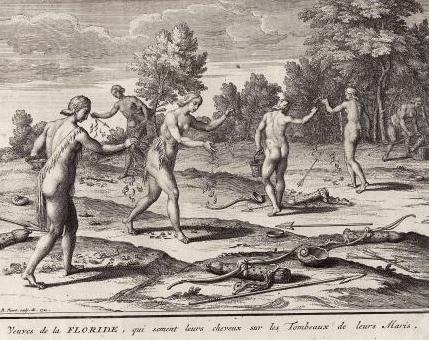
Two hundred years ago, shortly after the United States became independent, the Southern States had a vibrant civilisation, It had cities, arts, culture, and was drawing on influences from France, Spain, Holland and Britain. It had industry, large-scale agriculture, and it had political organisation. Florida, by contrast, despite having the first proper European settlements on the continent, had nothing. It was, to all intents and purposes, empty. There were some scattered Indian tribes - not the Seminoles, they hadn't arrived yet - a few small coastal towns like St Augustine and Tampa, one or two missionary settlements, and that's about it.

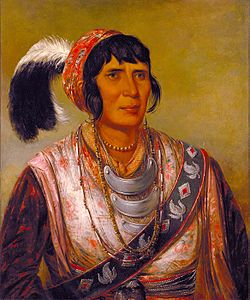
In about 1845, the US decided to do something with the newly created state of Florida, and sent troops in to clear out the Seminoles. They weren't native to Florida, they'd been pushed out of places further north and fled to the swamps in the peninsula. The Seminole Wars were pretty much contemporaneous with the expansions in the West. Effectively, Florida was frontier territory just as much as the Great Plains. The first real settlers didn't turn up until the 1860s, just before the Civil War.

The history of the Civil War in Florida is brief. Apart from a few small skirmishes, nothing happened. Some bits of Florida even stayed loyal to the Union, or were held by Union troops throughout the war. Its sole strategic interest was as a supplier of beef, and Florida's ports controlled shipping going from the Atlantic to the Gulf of Mexico. Frankly, nobody cared much about Florida. Florida wasn't really a significant part of the Confederacy. It just happened to be south of Georgia and therefore in the South.

In the 1880s, the West was fully opened up. Florida was still all but empty. Orlando was a tiny outpost where you could get hunting supplies. Miami was a farm. The total population of Florida was tiny, something under 50,000 people. Then the multi-millionaire mogul Flagler had this great idea of turning Florida into a place to go on holiday. He built railroads, he built hotels, and he invited his friends. Hell, he built cities. Orange farmers flooded into the region, and towns started booming. Miami came into existence in the late 1890s after a huge freeze in Central Florida which killed off the citrus trees. A farmer sent Flagler an orange from Miami. Realising that the isolated Southern Florida was the only place in the US that could still supply New Yorkers with their daily orange juice, Flagler built a railroad down to Miami and started shipping oranges north as fast as he could.

Since then, Florida has been dominated by tourism and leisure. Palm Beach became the place to go in the 1920s and 1930s, and in the 1960s, Disney moved in, and everything took off. It's still, despite the recession, the world's leading tourist destination.

As a result, Florida is completely unlike anywhere else. Of the 20 million people who live here now, fewer than 3 million were actually born here. Nearly half of them have arrived in the last ten years. Half of the incomers are foreign immigrants like me, mostly Puerto Rican and Cuban; the rest have migrated from other states as the tourism boom has spurred a need for all sorts of workers, or have retired here to spend their old age in the sun.

As a result, Florida's culture is completely modern. It's nothing like the old world genteel charm or even the backwoods redneck of the real South. Florida's a strange little sticky out bit on one corner of the US where people from all over the world go to have fun in the sun and launch rockets.


Tuesday, March 9, 2010

Why I miss my walk to work

Well, it's like this. I'm about 30lb (2 stone) overweight. No point denying it.

For my lifestyle, I need about 2000 calories a day. I'm eating about 2500, so I'm gaining about a pound a week. So, either I need to cut down to nearer 1600/day and start losing a pound a week, or, more realistically, I need to cut down to 2000/day and start taking some exercise.

Significantly, when I lived in Cambridge, my daily walk to work and back was just enough to burn the right amount of calories to balance what I actually ate. It's not the good Southern food that's done me in. It's sitting on my butt all day and going everywhere by car.


Wednesday, March 3, 2010

Plus ça change...

Turn the keywords of my blog into a picture, and it looks like this.


Last June, it looked like this.

I love the way that people and friends have now taken centre stage.

Created with wordle.

Tuesday, March 2, 2010

Autistic media


My birthday, 2009, at House of Blues in Orlando.

A case of unmistaken identities

For the last eighteen months or so, I've been trying an experiment. Being myself online. Not Matt the Mongoose, or some enigmatic avatar, just me. Here on my blog, on twitter, on Facebook, on LinkedIn, on MySpace, and everywhere else where I need to appear on the Internet, I've been plain old Matt Kelland. I've recorded and broadcast pretty much everything as it happened: work, thoughts, events, from the trivial to the life-changing. The world and his bot has been able to follow along as I got divorced, fell in love, got remarried, emigrated, underwent surgery, watched a bunch of movies, ate all sorts of food, promoted Moviestorm, became increasingly disenchanted with the British political system, and babbled inanely in my insomnia.

It's been interesting. I've met a lot of new people that way, and in the process, learned a lot about myself, a lot about other people, and a lot about modern society. As an anthropologist, it's fascinating to observe how we are becoming increasingly used to seeing each other in different contexts, and trying to understand how social structures change once you have a large-scale society with widespread intimate communication. We now have a level of knowledge about each others' lives that's perfectly normal for mediaeval village life, but completely unprecedented on a global scale. I know some people on the other side of the world more closely than I know anyone in this street. Hell, I know them better than I know anyone else in this city outside my household, even though I've never met them in person.

Conversely, of course, they know me rather well.

My birthday, 2009, at home in bed, hatless. Too intimate for public consumption?

Too well, I've decided.

It may be the way the younger generation is doing it, but, on reflection, I'm not comfortable with it. It's not that I have anything to hide, it's more that trying to present all sides of myself to everyone just doesn't work. It's even not a matter of privacy. It's just that I naturally adopt different personas in different contexts, and you can't do that when everyone sees exactly the same thing.

So-called social media can't distinguish between different categories of friends, and it has no inherent sense of time and place, let alone what's appropriate when. Effectively, it's become autistic media. We find ourselves behaving in ways that may be acceptable in some circumstances, but without any real sense of what the circumstances actually are for the reader and the appropriate etiquette.

Communication, as I keep reminding myself every day, isn't about the person communicating. It's about how what they say is received by the audience. When I use social media, the audience in my mind consists of the people I converse with most often - those who reply to me, and those who I follow. I don't really take time to consider the 80% of people who just lurk and read. That's a complete contrast to when I write professionally, when the first thing I think about is who's actually going to read what I'm writing.


At work, speaking in public.

Autistic media

Let me put it like this. The people who read my blog, Facebook or Twitter feed include: my family, my kids, my mum, my ex-wife, my boss, my investors, my colleagues, my customers, my potential customers, old school friends & colleagues I've lost touch with, new friends, people who share interests with me, and friends of friends I barely know. Some of those people are extremely close to me, others are passing acquaintances. In any given day, I could find myself talking about work, movies, food, travel, books, writing, games, music, art, politics, history, science, technology, anthropology, psychology, the occult, mythology, sport, airships, motorbikes, local events, my social & personal life, or just passing on dumb jokes & links.

In the autistic media world, I'm talking about all of those things to all of those people. Most of them, of course, aren't interested in most of those things. (And if the truth be told, I'm not interested in all of those things all of the time either.)

In the real world, I'd address that by choosing the right contexts and the right groups of people for the different subjects, and adjust my attitudes, speech and behaviour accordingly. If I were talking about last weekend's rugby, for example, I'd have a whole different conversation with the guys from my rugby club, my friends in Orlando, and my stepdad. There are some subjects I'd prefer to avoid entirely in front of my mum or my kids. And when my readers include people I know professionally, it feels like I'm at work and on show all the time.

Effectively, autistic media can't distinguish between the office and the pub, between an afternoon with your closest friends and a school reunion, or between a interest and an obsession. Your drunken weekend escapades make their way to your workplace, and your hobbyist friends have to put up with the minutiae of your work. You bombard your casual acquaintances with things they really don't need to know, and then your other friends drop you right in the shit with their comments about things that were funny at the time but which you'd rather stayed within that group.

Dressed up for a party.

General vs special relatives

In the old days, blogs were much more focused, which provided a social context. If I wrote a machinima blog, that would be my identity. Who I "really am" wouldn't matter. What you'd be interested in would be purely my opinions and what I had to say on that one subject. It's also an asymmetric relationship. I write, you read, you may comment if you wish, and I may choose to respond. I would engage my interests with a set of special-purpose relationships: a number of forums or mailing lists to chat about my hobbies, blogs to write about my interests, and a protected journal to share with those closest to me. In fact, most of the blogs I read these days are still special-interest blogs. It's not that the authors are necessarily monomaniacs, they just choose not to share the rest of themselves with the likes of me.

The generalised nature of sites like Facebook, though, changes that. By centralising all of those specialised things, it makes it much easier to communicate more, and it becomes trivial to transfer information between groups. Twitter crossposts to MySpace, my blog crossposts to Facebook and Google, Facebook feeds everything and slurps everything back out again. I have absolutely no idea where you're reading this. I don't have to cut'n'paste a link from my steampunk mailing list to the airships blog, I just hit share or retweet, and all my airship-loving friends can see the whateveritis. I don't have to tell ten different groups why I liked Avatar, I just post it once, and it goes to everyone. My readers know "who I am", and they're not getting some manufactured authorial personality, they can see the "real me", just as if they were my closest friends. In fact, they're all my friends now, aren't they?

It seems like a great idea, but imagine this. There's a huge room, and it's filled with every single one of your followers. (In my case, that's a bit under a thousand people.) Now, every time you say something, just shout into this megaphone, and it'll get blasted out on a PA to all of them. And if that wasn't crazy enough, every one of them has their own megaphone and their own PA, and they're yelling too.

That's just dumb.

That's all our social conventions shot to hell and replaced with a Tower of Babel. We're all talking, and nobody's listening.


Is this the real me? Is this just fantasy?

Will the real Matt please stand up?

So, I'm pretty much thinking that my "integrated personality" is something that doesn't need to exist online. I'd be much better off as a set of disconnected identities, each tailored for different social contexts, just as I am in real life. In those contexts, I can speak as I choose, indulge my interests as I choose, and without risk of upsetting or boring anyone else.

At the end of the day, there are only so many people I can cope with. It's about 150, which you may recognise as Dunbar's number. Interestingly, Dunbar's in the middle of a study on Facebook friends, and is likely to conclude that however many "friends" we have, we only interact with about 150 of them.

I guess the upshot is that I plan to make some major changes to my online personae. I'll probably create separate personal and professional twitter feeds & facebook accounts. I'll have a really hard think about what I want to say online, and who I want to say it to, and which of those factors is dominant. Do I select my audience to be receptive to what I want to say, or do I tailor my postings to match my audience? Probably the former, personally, and the latter, professionally. I may set up some different blogs for niche interests, and think about posting there rather than onto the more general feeds. I'm certainly planning to post a lot less until I feel like I know who's actually listening to me.

One day, autistic media will become truly social, in that it will understand social contexts and allow us to present ourselves appropriately in each. There's a lot to learn. After all, we're trying to replicate tens of thousands of years of social evolution with technology that's only a few decades old. It's a big task.

Goofin' around.

Monday, January 18, 2010

Now that's show business!

Awards season is here again, and the annual furore over which movie won the Golden Globe has really kicked off this year. The reaction to Avatar's win was truly shocking. I've never seen such bile spewed forth, and I've been on the Net for 20-odd years.

Putting aside all the juvenile and ill-informed vitriol, why do people take these awards so seriously? Quick test. Here's a short list of films. What do they have in common?

  • Network
  • Annie Hall
  • Coming Home
  • Kramer vs Kramer
  • Ordinary People
  • Unforgiven
  • Terms of Endearment
  • Million Dollar Baby
They all won at least three of the big six Oscars (Film, Director, Actor, Actress, Supporting Actor & Actress), and they're all, as far as I'm concerned, eminently forgettable. In fact, of the dozen or so movies that have achieved this feat in the last 35 or so years, only two of them have really stood the test of time: Gandhi and Rain Man. There are other good films in this select group, like Amadeus and Silence of the Lambs, but they're not what I'd call great films. So, frankly, why do we care? The award only means that this group of people, at this time, liked that movie better than the others. It's not an enduring mark of greatness.

So what does make a great movie? Well, there's one simple measure of any form of entertainment. How many people went to see it? Box office may not be a measure of great artistic merit, but it does certainly tell you that this film appeals to a lot of people. And that, if you're in show business, is what pays the bills. Come on, making money ain't necessarily a bad thing. Films wouldn't get made if they weren't commercially successful. And that arty flick you like probably wouldn't have got funded if the studio hadn't made a ton of moolah off one of its blockbusters. It's been that way for a long, long time.

"We don't make films to make money. We make money so we can make more films." - Walt Disney

There's a great list of highest grossing movies over on wikipedia. It's worth a look.

Honestly, how can you not respect a man who makes the highest grossing film of all time, and then spends ten years to make another one that's just as huge, even without a massively popular hit single to help sell it. (Currently, Avatar's running #2 with $1.6bn, behind Titanic's $1.8bn. Anyone seriously want to bet that Avatar won't take the top spot?) Yes, it's a derivative story. So what? Show me any film in that list that doesn't have a derivative story. Actually, show me any book, comic or anything else that doesn't have a derivative story. That's what makes Avatar work - it takes familiar elements and reworks them into a fantastic storytelling experience. Just like Harry Potter, Lord of the Rings, Pirates of the Caribbean, Batman, Spiderman, Shrek, and so on. That's why we love them.

More interesting, though, compare what it cost to make the movie with what it made at box office, a bit further down the page. There's a fairly simple rule. To be one of these mega-blockbusters, you need to be one of the biggest budget movies of the year, and you'll make back 3 to 10 times what you invested.

Except, now look at Rocky. Cost, $1.1m. Box office, $225m. Holy crap, Batman. That film made back 200 times what it cost, which is truly phenomenal, and that doesn't even cover the video & DVD sales or the TV money, let alone the merchandising. Now that, my friends, is the kind of box office returns movie producers dream about. How many other films got made by UA because of the money they made from Rocky? It may not be the best movie ever, but it shows that someone really knew exactly what the public wanted and gave it to them. That's where the business comes into the show.

I therefore nominate Rocky as the most successful movie ever made. And you know what, I've never even seen it.